o
p
t
i
m
a
r
o
b
o
t
i
c
s

Make a Call


Make a Call
Blogs
Why Choose an RF Remote Control Kit?
Why Choose an Rf Remote Control Kit?
Choosing a control system often begins with a practical question: what must it operate, and from how far away? An Rf Remote Control Kit uses radio frequency signals to send commands without direct line of sight. A user can switch on a gate motor from inside a vehicle, activate lighting through a wall, or control equipment across a workshop. That small convenience can improve safety, workflow, and installation flexibility.
Dr. Ted Rappaport, a leading wireless communications researcher, has said, “The wireless channel is the most important part of a wireless system.” His point matters when selecting a kit. Range is not determined by the transmitter alone. Walls, metal cabinets, antenna placement, battery condition, and local interference can change performance. A reliable kit should offer suitable frequency operation, stable coding, clear documentation, and a receiver that matches the load and voltage requirements.
Details matter.
In practical installations, rolling-code security can reduce accidental or unauthorized activation. A sealed remote may better tolerate dust near a garage door. A relay with adequate current capacity can prevent overheating during repeated switching. Still, no kit is perfect. Advertised range may be measured in open air, not behind concrete walls. Some installations also need professional testing and additional protective components.
A well-chosen Rf Remote Control Kit is therefore more than a remote and receiver. It is a complete control decision, shaped by environment, distance, safety, and future maintenance.
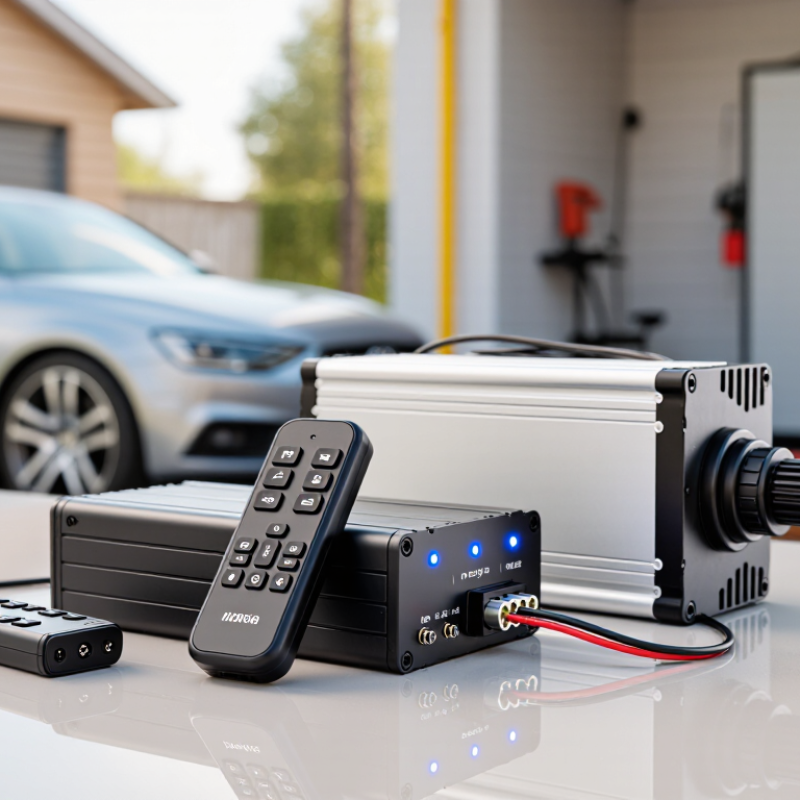
Table of Contents [Hide]
What Is an RF Remote Control Kit?
An RF remote control kit uses radio frequency signals to operate equipment without a direct line of sight. It normally includes a handheld transmitter, a receiver, wiring, and sometimes a relay module. Pressing a button sends a coded signal through the air. The receiver validates that signal and switches the connected load.
Unlike infrared controls, RF systems can work through cabinets, thin walls, and other obstacles. Common frequencies include 315 MHz, 433 MHz, 868 MHz, and 915 MHz. The correct option depends on regional requirements and local interference. GSMA Intelligence reports that global IoT connections will continue growing rapidly through 2030. This expansion increases demand for dependable wireless control, but it does not make every kit suitable. A basic receiver may lack encryption, range testing, or overload protection. That matters. MarketsandMarkets also identifies wireless connectivity as a major technology area across automation and smart-device applications.
Tips: Check the receiver’s voltage, relay load, operating distance, and frequency before installation. Keep the antenna away from metal surfaces and power cables. Test the kit with the final enclosure fitted. Range often drops after installation. A thoughtful setup also includes a manual override and a clearly labeled power source. In practical testing, the cheapest kit may work well indoors, yet fail near motors or thick concrete. That is an uncomfortable detail, but ignoring it can create unreliable control.
Brands
Proudly Trusted by Top Suppliers Worldwide







Let us know and we will automate, together to fit your industrial needs.
 +91-97254 16844
Clients
Proudly Trusted by Top Companies Worldwide


Do you need Help? Get in touch.
X
Please fill out the form below and we will get back to you as soon as possible.