o
p
t
i
m
a
r
o
b
o
t
i
c
s

Make a Call


Make a Call
Blogs
Why Choose a Lithium Battery Pack for Global Sourcing?
Choosing a Lithium Battery Pack for global sourcing is not simply a price decision. It is a decision about energy density, safety, consistency, and long-term supply reliability. Buyers often compare quotations first. That can be a costly habit.
A well-designed pack can power medical devices, warehouse equipment, portable electronics, and electric mobility systems with less weight and longer operating time. Lithium-ion cells also support flexible formats, including cylindrical 18650 and 21700 designs. However, performance depends on more than the cells. The battery management system, enclosure, wiring, charging profile, and thermal controls all matter. Small details become important during international transportation.
As battery pioneer John B. Goodenough stated, “The battery is the most important component of an electric vehicle.” His observation applies more broadly to many powered products. The battery can determine product weight, customer experience, maintenance frequency, and even commercial success.
Global sourcing requires evidence, not attractive samples alone. Request cell specifications, capacity test data, cycle-life records, production traceability, and inspection procedures. Confirm relevant transport and product requirements, including UN 38.3 testing and applicable IEC standards. Requirements vary by destination and application.
A lower quotation may hide weaker cells or inconsistent assembly. That risk is easy to underestimate. I would not assume that every certified-looking document proves reliable production. An independent pre-shipment inspection can reveal loose connectors, damaged insulation, or incorrect labeling.
The strongest supplier is not always the largest. It is the one that communicates clearly, documents limitations, and repeats stable quality. Global sourcing works better when technical review comes before negotiation. Reliability costs something. So does ignoring it.
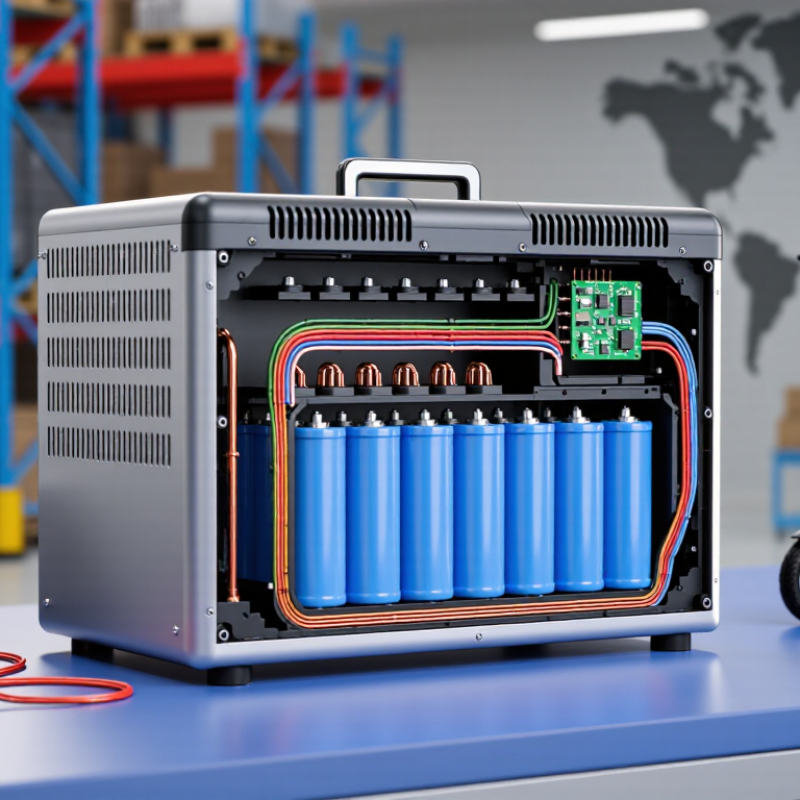
Table of Contents [Hide]
What Is a Lithium Battery Pack?
A lithium battery pack is a group of lithium cells connected to deliver usable electrical power. It combines cells, wiring, protection circuits, and a protective enclosure. The cells store energy through reversible chemical reactions. A battery management system monitors voltage, temperature, and current. It can balance cells and stop unsafe charging or discharging. Without this control, performance and service life may suffer. The outer case protects the pack from vibration, moisture, and accidental impact.
For global sourcing, buyers should define voltage, capacity, dimensions, and operating temperature clearly. Connector type and cable length also affect installation. A credible supplier should provide test reports, safety data, and traceable production records. These documents help buyers compare products beyond attractive quotations. Specifications alone can mislead. Real output changes with temperature, discharge rate, and aging. A pack rated for 10 hours may deliver less under heavy equipment loads.
Experienced buyers inspect sample packs before approving larger orders. They check weight, labels, weld quality, insulation, and charging behavior. Small faults can become expensive field failures. No design is perfect. A pack may lose capacity after repeated heat exposure, even when it passes initial testing. Packaging and shipping conditions deserve equal attention. Destination rules differ, so required markings and transport documents must be verified early. Clear communication about testing methods reduces misunderstandings between engineers, suppliers, and import teams.
Brands
Proudly Trusted by Top Suppliers Worldwide







Let us know and we will automate, together to fit your industrial needs.
 +91-97254 16844
Clients
Proudly Trusted by Top Companies Worldwide


Do you need Help? Get in touch.
X
Please fill out the form below and we will get back to you as soon as possible.