o
p
t
i
m
a
r
o
b
o
t
i
c
s

Make a Call


Make a Call
Blogs
Why Is Freeze Dried Candy So Popular Worldwide?
Why Is Freeze Dried Candy So Popular Worldwide?
Freeze Dried Candy has moved from specialty shops into mainstream snack culture. Its appeal is easy to recognize. A chewy gummy becomes crisp, airy, and surprisingly light. When bitten, it cracks loudly and dissolves quickly. That sensory change creates a strong “try it” moment for consumers and social media audiences.
Industry data helps explain this growth. Grand View Research reported that the global freeze-dried food market was valued at approximately US$2.5 billion in 2023, with continued expansion expected through 2030. The report identifies convenience, longer shelf stability, and interest in lightweight foods as important market drivers. These advantages support candy brands seeking distinctive formats and easier online distribution. Innova Market Insights has also repeatedly identified texture, novelty, and experiential eating as influential global food trends. Freeze Dried Candy fits all three.
However, the category is not automatically healthier. Freeze-drying changes texture and moisture, but it does not remove sugar, calories, or allergen responsibilities. This distinction matters. Research from the U.S. Department of Agriculture explains that freeze-drying removes water under low-temperature vacuum conditions, helping preserve shape and flavor. Candy manufacturers still need disciplined packaging, moisture control, and accurate labeling. Otherwise, the crisp texture can disappear inside a poorly sealed pouch.
The excitement is real. Yet consumer enthusiasm may sometimes exceed nutritional understanding. That gap deserves attention as the category grows. Performance, transparency, and responsible product claims will determine whether Freeze Dried Candy becomes a lasting global segment or merely a passing novelty.
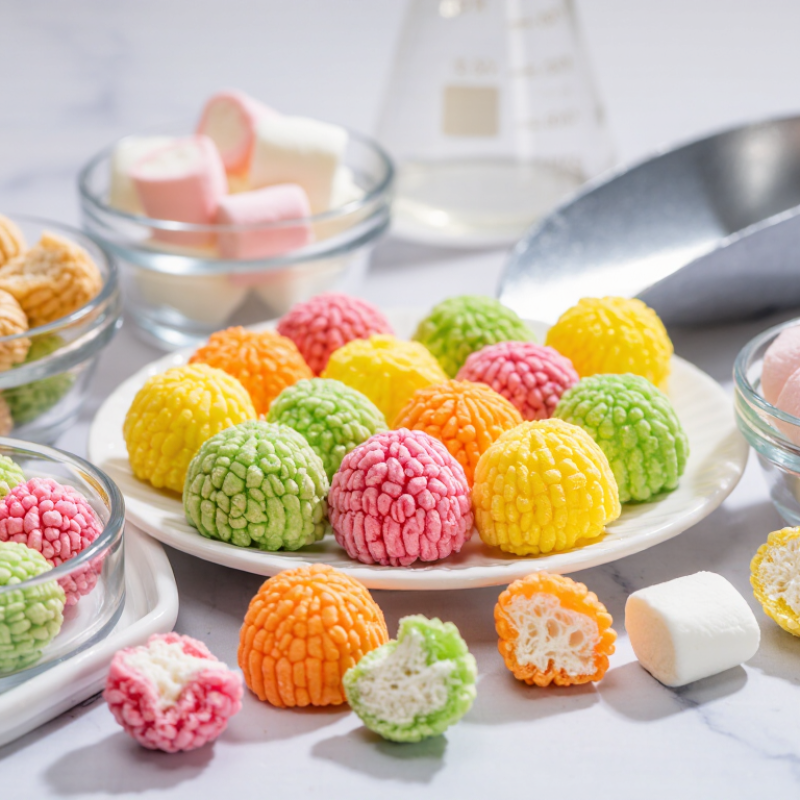
Table of Contents [Hide]
What Is Freeze-Dried Candy and How Is It Made?
Freeze-dried candy is ordinary candy transformed by a careful low-moisture process. Manufacturers first freeze the pieces, often making them brittle and cold. Then, they place the candy inside a vacuum chamber. Under reduced pressure, frozen water changes directly into vapor. This process is called sublimation. The candy keeps much of its original shape, color, and flavor. It also develops a crisp, airy texture that can crack loudly between your teeth.
The result feels surprisingly light. It may look larger than expected. Moisture removal creates tiny spaces inside the candy, which explains its delicate crunch. However, freeze-drying does not automatically make candy healthier. Sugar, acids, colors, and allergens may remain concentrated after water disappears. Reliable producers should control temperature, pressure, sanitation, and packaging carefully. A moisture-proof package helps prevent softening during storage. The process is precise, but not perfect. Some pieces crumble, while others may taste sharper than expected.
Tips: Choose sealed packaging with clear ingredient and allergen information. Store the candy away from humidity and heat. Open it briefly, then reseal it tightly. Check the texture before serving, especially with young children. Freeze-dried candy can break into hard fragments. That small detail deserves attention.
Why Is Freeze Dried Candy So Popular Worldwide? - What Is Freeze-Dried Candy and How Is It Made?
| Topic | Key Fact | Explanation |
|---|---|---|
| Definition | Freeze-dried candy is candy that has had most of its water removed through sublimation. | The candy is frozen and placed under low pressure. Ice changes directly from a solid into vapor instead of melting into liquid water. |
| Main Production Stage | Freezing comes before vacuum drying. | Rapid and controlled freezing helps form ice crystals inside the product. The frozen candy is then transferred to a vacuum chamber for drying. |
| Primary Drying | Ice is removed by sublimation. | Under reduced pressure, gentle heat provides energy for the ice to become vapor. This stage removes most of the free water while helping the product retain its shape. |
| Secondary Drying | Bound moisture is reduced further. | A later drying stage raises the product temperature carefully to remove moisture that remains attached to the food structure. |
| The texture is usually light, crisp, and porous. | Water removal can leave small spaces in the candy matrix. When bitten, these spaces create a crunchy or airy mouthfeel that differs from conventional chewy candy. | |
| Flavor Experience | The flavor may seem more concentrated. | Removing water reduces dilution, while the porous structure can make the candy break down quickly in the mouth. The sweetness is still determined mainly by the original ingredients. |
| Appearance | The original shape can often be retained. | Because sublimation removes ice without a conventional liquid-melting step, many products maintain recognizable shapes, although expansion, cracking, or surface changes may occur. |
| Shelf Stability | Low moisture can help slow spoilage reactions. | Microorganisms generally need available water to grow. Freeze-dried candy still requires suitable packaging because humidity can soften the texture and reduce quality. |
| Packaging | Moisture-barrier packaging is important. | Sealed pouches, rigid containers, or other protective packaging help limit exposure to air and humidity. Desiccant packets may be used when appropriate and must not be eaten. |
| Portability | The product is lightweight compared with its original form. | Removing water lowers weight, which can make the candy convenient for snacks, gift boxes, travel, and online delivery when protected from crushing and moisture. |
| Popularity Driver | Its unusual sensory contrast attracts attention. | Consumers often seek the combination of familiar candy flavors with a new crunchy texture, making freeze-dried candy suitable for demonstrations, videos, and novelty snack experiences. |
| Ingredient Consideration | Freeze-drying does not automatically make candy healthier. | The process primarily removes water. Calories, sugars, allergens, and other ingredients may remain similar per original piece, so nutrition information should be checked on the product label. |
| Storage | A cool, dry, sealed environment is recommended. | Keeping the package closed and away from heat, sunlight, and humidity helps preserve crispness and flavor. Once opened, the product may gradually absorb moisture from the air. |
| Consumer Appeal | The product combines familiarity with novelty. | Recognizable candy forms make the product accessible, while its expanded appearance, crisp bite, and fast-melting texture provide a distinctive eating experience. |
Note: Freeze-dried candy can vary significantly by recipe, size, sugar composition, equipment, packaging, and storage conditions. Product labels and handling instructions should always be followed.
Brands
Proudly Trusted by Top Suppliers Worldwide







Let us know and we will automate, together to fit your industrial needs.
 +91-97254 16844
Clients
Proudly Trusted by Top Companies Worldwide


Do you need Help? Get in touch.
X
Please fill out the form below and we will get back to you as soon as possible.