o
p
t
i
m
a
r
o
b
o
t
i
c
s

Make a Call


Make a Call
Blogs
Why Are Reefer Unit Parts Important for Global Buyers?
Global buyers depend on refrigerated containers, trucks, and trailers to protect temperature-sensitive cargo across long routes. Behind every stable shipment are critical Reefer Unit Parts, including compressors, evaporator fans, sensors, controllers, belts, filters, and electrical connectors. A small sensor error can trigger an incorrect temperature reading. A worn fan may leave one corner of a container warmer than the rest.
Judith Evans, a respected refrigeration researcher, has expressed a useful cold-chain principle: “The cold chain is only as strong as its weakest link.” Her observation explains why experienced buyers assess more than price. They examine part compatibility, operating history, documentation, service access, and expected performance in different climates. Salt air, dust, vibration, and repeated door openings can expose weak components quickly.
The right parts reduce unexpected downtime and help technicians complete repairs with fewer delays. They can also support more consistent cargo protection, lower energy waste, and better maintenance planning. For global buyers, these benefits affect suppliers, carriers, warehouse teams, and final customers.
Yet, this picture is not perfect. A premium component can still fail when installation is careless. A low-cost part may perform well in one route but struggle in another. Buyers need evidence, not confident promises. Technical specifications, traceable quality records, warranty terms, and practical field experience deserve close attention.
This article explores why Reefer Unit Parts matter in international purchasing. It considers reliability, compatibility, lifecycle cost, and supply continuity. The details may seem small. Their consequences are not.
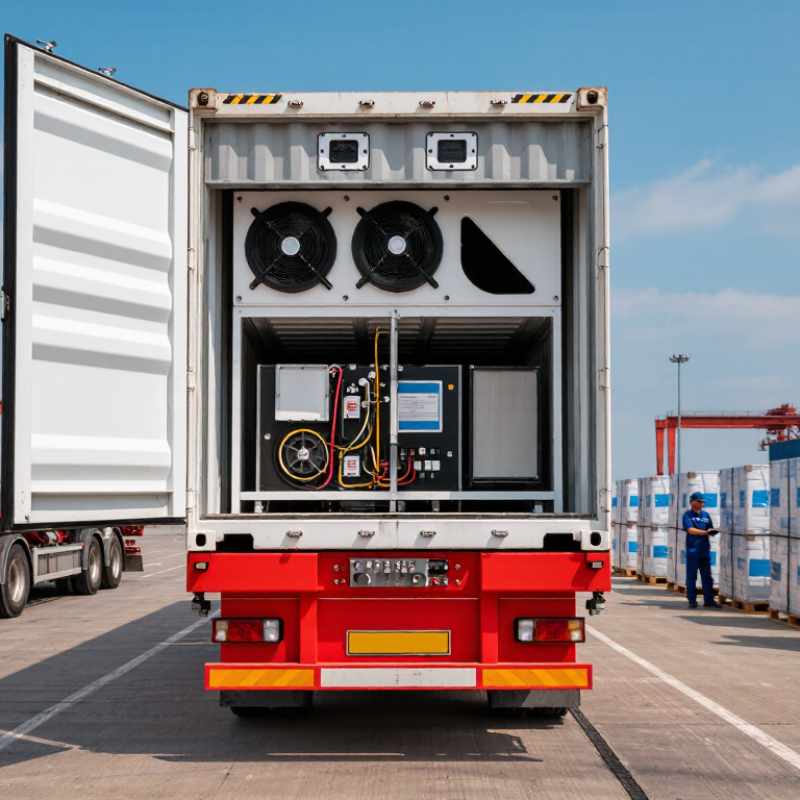
Table of Contents [Hide]
What Are Reefer Unit Parts and How Do They Work?
For global buyers, understanding reefer unit parts means understanding how temperature control works inside a refrigerated container. The compressor pressurizes refrigerant and moves it through the cooling circuit. At the condenser, heat leaves the system. The expansion valve then reduces pressure and temperature. Cold refrigerant enters the evaporator, where it absorbs heat from the container air. Fans circulate that cooled air around cartons, pallets, or other temperature-sensitive cargo.
A controller reads sensor signals and adjusts cooling, heating, airflow, and defrost cycles. Sensors measure supply and return-air temperatures. The electrical system powers motors, controls, and safety devices. Door seals and insulation are not active machine parts, but they strongly affect performance. A damaged seal can make a healthy unit run continuously. That detail is often underestimated.
Tips: Match each replacement part with the unit’s model, specifications, and operating conditions. Check connectors, mounting points, voltage, and sensor range before ordering. Ask for test records when possible. Inspect corrosion, worn bearings, cracked wiring, and contaminated coils. In my experience, replacing only a visible component can miss the real fault. A weak fan may result from a motor problem, blocked airflow, or a faulty controller. Good diagnostics take time. Rushing can create repeat repairs and unexpected temperature variation during ocean transport.
Brands
Proudly Trusted by Top Suppliers Worldwide







Let us know and we will automate, together to fit your industrial needs.
 +91-97254 16844
Clients
Proudly Trusted by Top Companies Worldwide


Do you need Help? Get in touch.
X
Please fill out the form below and we will get back to you as soon as possible.