o
p
t
i
m
a
r
o
b
o
t
i
c
s

Make a Call


Make a Call
Blogs
Why Is Robot Technology Important for Global Buyers?
Why Is Robot Technology Important for Global Buyers?
Robot technology has moved from specialized factories into warehouses, hospitals, farms, and service businesses. For global buyers, it can improve production consistency, workplace safety, and operational visibility. A robotic arm can repeat a precise motion for thousands of cycles. An autonomous mobile robot can move parts through a busy warehouse without waiting for a forklift.
The stakes are real. Buyers must evaluate more than purchase price. They need evidence of uptime, maintenance requirements, software compatibility, and operator training. A reliable supplier should provide testing records, warranty terms, spare-parts access, and clear technical documentation. Regional service coverage also matters when a production line stops at midnight.
Robot technology may reduce repetitive work, but it does not remove every business risk. Integration can take longer than expected. Skilled technicians may be difficult to find. Some systems perform poorly when product sizes or factory layouts change. These limitations deserve honest attention, not polished sales claims.
Data matters. Buyers can compare cycle times, energy use, error rates, and total ownership costs across suppliers. Independent inspections and pilot projects can reveal problems before a large order is placed. Experience from real facilities often teaches more than a demonstration video.
The right solution depends on the buyer’s process, workforce, budget, and growth plans. A small manufacturer may need a flexible collaborative robot, while a high-volume plant may require a fully automated line. Better decisions come from measurable goals and careful verification. This article examines why robot technology matters globally, where its value is strongest, and what responsible buyers should question before investing.
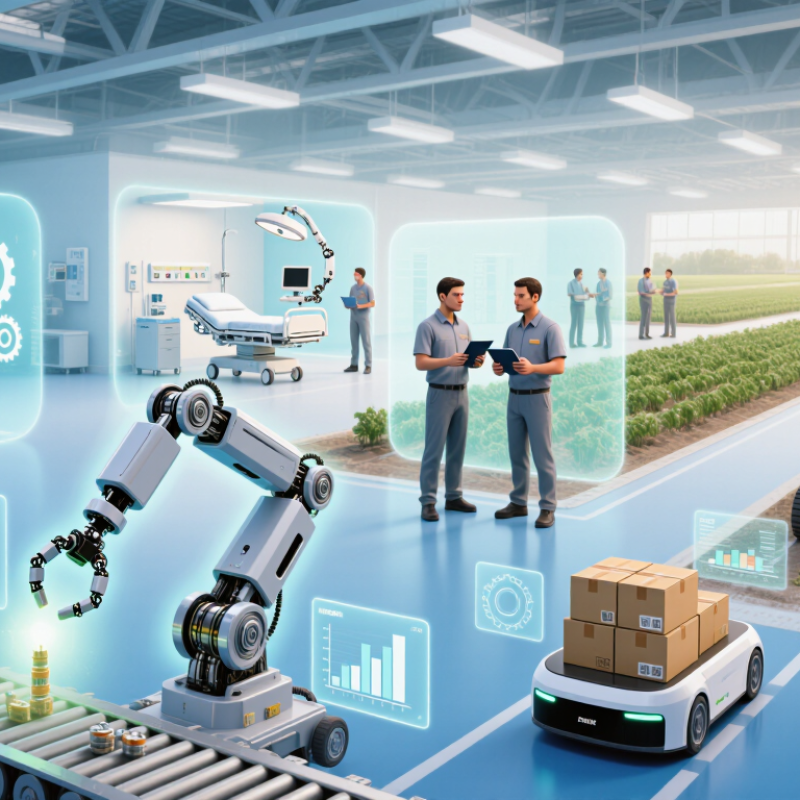
Table of Contents
[Hide]
What Robot Technology Includes and How It Works
Robot technology includes mechanical bodies, sensors, controllers, software, and safety systems. Its purpose is not simply movement. A robot senses its surroundings, processes information, and performs a programmed action. Cameras inspect labels, force sensors detect pressure, and encoders track joint positions. In a warehouse, these parts work together like a careful extra hand. The controller compares sensor data with target instructions. It then adjusts speed, direction, or grip. Small corrections matter.
Industrial robots often use articulated arms, mobile platforms, or collaborative units. Each design fits a different working environment. An arm may place components within millimeter-level accuracy. A mobile robot can carry containers across changing routes. Collaborative systems usually monitor distance, speed, and contact force near people. Their operation depends on algorithms, mapping, task planning, and communication with existing equipment. Integration is often harder than the machine itself. Buyers should examine cycle time, payload, reach, accuracy, maintenance access, and operator training. These details reveal practical value better than impressive demonstrations.
Reliable deployment also requires tested safety functions, clear emergency procedures, and regular inspections. Data should be protected during remote monitoring and system updates. In changing factories, performance can shift when lighting, floor conditions, or product sizes change. A vision system may struggle with glare. A gripper may slip on oily packaging. Small failures teach important lessons. Robot technology is powerful, but it is not automatic judgment. Human review remains important during unusual events, software faults, and process changes. Even a well-designed project needs adjustment after real production begins.
Why Is Robot Technology Important for Global Buyers? - What Robot Technology Includes and How It Works
| Technology Category | What It Includes | How It Works | Typical Performance Indicators | Value for Global Buyers | Relevant Standards or Requirements |
|---|---|---|---|---|---|
| Industrial Robotic Arms |
|
Servo motors move connected joints according to programmed coordinates. The controller converts motion commands into synchronized joint movements for tasks such as welding, assembly, painting, and palletizing. | Payload capacity, reach, repeatability, axis count, cycle time, protection rating, and allowable mounting position. | Provides consistent high-speed operation for repetitive or hazardous production tasks and can be integrated into automated production lines. | Industrial robot installations commonly reference ISO 10218 and applicable electrical, machinery, and workplace-safety regulations. |
| Collaborative Robots |
|
Built-in sensors monitor force, speed, position, or other safety parameters. The robot can reduce speed, stop, or operate with limited force when a defined safety condition is detected. | Payload, reach, repeatability, monitored stop response, maximum operating speed, tool compatibility, and safety-rated functions. | Suitable for flexible cells and applications where people and robots work in nearby areas, although a risk assessment and appropriate safeguarding remain necessary. | Collaborative applications commonly consider ISO/TS 15066 together with ISO 10218 and local occupational-safety rules. |
| Autonomous Mobile Robots |
|
Laser scanners, cameras, inertial sensors, or other sensors help the robot create or use a map, locate itself, plan a route, avoid obstacles, and communicate with warehouse or manufacturing systems. | Payload, driving speed, navigation accuracy, battery runtime, charging method, obstacle-detection range, and fleet capacity. | Improves material-flow flexibility and reduces dependence on fixed conveyor routes when layouts or product flows change frequently. | Safety evaluation may involve ISO 3691-4 for driverless industrial trucks and region-specific machinery and radio requirements. |
| Automated Guided Vehicles |
|
Vehicles follow defined routes using magnetic tape, wires, reflectors, markers, or other guidance references. Sensors and control software manage stopping, routing, and interaction with other vehicles. | Payload, route accuracy, travel speed, loading height, turning radius, battery capacity, and traffic-management capability. | Offers predictable and repeatable transportation for stable material routes in warehouses, factories, and distribution facilities. | Driverless industrial truck safety is commonly assessed with ISO 3691-4 and applicable site-specific traffic controls. |
| Machine Vision |
|
A camera captures images or depth data. Software analyzes features such as position, shape, color, surface defects, or dimensions and sends inspection or guidance results to the robot controller. | Resolution, field of view, frame rate, working distance, detection accuracy, lighting stability, and calibration repeatability. | Supports quality inspection, bin picking, part identification, robot guidance, and traceability across products with different shapes or orientations. | Performance depends on lighting, calibration, lens selection, product variation, and the required inspection tolerance. |
| End Effectors and Grippers |
|
The tool is mounted at the robot wrist and converts robot motion into a task-specific action, such as gripping, lifting, joining, dispensing, cutting, or surface treatment. | Maximum load, gripping force, jaw stroke, vacuum flow, tool weight, changeover time, cycle time, and compatibility with workpiece materials. | Directly affects handling reliability, product protection, cycle time, and the range of products that one robot cell can process. | Tool design must account for load limits, emergency release behavior, compressed-air safety, electrical safety, and the robot’s wrist specifications. |
| Robot Controllers and Software |
|
The controller interprets programs, coordinates axes, manages inputs and outputs, synchronizes tools, and exchanges data with production equipment and factory-management systems. | Supported communication protocols, interpolation performance, program capacity, data logging, cybersecurity functions, and integration options. | Determines how easily buyers can integrate, modify, monitor, and maintain robotic equipment within a multi-vendor production environment. | Common considerations include industrial Ethernet, access control, network segmentation, software backup, and cybersecurity risk management. |
| Sensors and Safety Systems |
|
Sensors measure position, force, speed, presence, distance, or environmental conditions. Safety systems transmit defined signals that stop or limit hazardous motion when necessary. | Detection range, response time, measurement accuracy, safety integrity level, performance level, and environmental protection rating. | Reduces operational risk, supports compliance, and helps maintain reliable production by detecting abnormal conditions before damage or injury occurs. | Risk assessments may reference ISO 12100, ISO 13849-1, IEC 61508, and applicable national workplace-safety requirements. |
| Artificial Intelligence and Data Analytics |
|
Algorithms learn from historical or real-time data to classify objects, identify abnormal patterns, estimate equipment condition, or optimize schedules and process parameters. | Detection precision, false-positive rate, model latency, data availability, maintenance prediction accuracy, and retraining requirements. | Can improve inspection, asset utilization, maintenance planning, and adaptability when product variety or operating conditions change. | Buyers should evaluate data ownership, privacy, cybersecurity, model validation, explainability, and performance under actual operating conditions. |
| Power, Charging, and Energy Management |
|
Electrical power is converted and distributed to motors, controllers, sensors, and tools. Mobile robots recharge automatically, manually, or through battery-swapping procedures. | Rated voltage, peak power, energy consumption, battery capacity, charging time, operating temperature, and expected battery service life. | Influences operating cost, uptime, facility requirements, carbon footprint, and the total cost of ownership over the equipment lifecycle. | Electrical installations should meet local voltage, grounding, electromagnetic-compatibility, battery, and fire-safety requirements. |
| Integration, Maintenance, and Lifecycle Support |
|
Robotic equipment is connected to upstream and downstream machines, tested against process requirements, commissioned, monitored, and maintained through scheduled and corrective procedures. | Overall equipment effectiveness, mean time between failures, mean time to repair, spare-parts availability, commissioning time, and training coverage. | Strong lifecycle support reduces downtime, improves return on investment, and makes deployment more practical across different countries and operating environments. | Buyers should verify technical documentation, conformity requirements, warranty scope, service response, software-update policy, and operator training. |
Note: Actual performance depends on the application, payload, tooling, layout, environmental conditions, programming, safety design, and integration quality. Buyers should validate all specifications through application testing and a formal risk assessment.
Related Posts
-
2026 Best Robotics Stocks to Buy Worldwide?
-
What is a Robot Machine and How Does It Work?
-
Top 10 Collaborative Robot Arms for Efficient Automation?
-

Unleashing the Future: How Robot Technology is Revolutionizing Everyday Life
-

How to Choose Collaborative Robots in 2026?
-
How to Become a Robotics Engineer: Skills, Education, and Career Path
Brands
Proudly Trusted by Top Suppliers Worldwide






Let us know and we will automate, together to fit your industrial needs.
 +91-97254 16844
Clients
Proudly Trusted by Top Companies Worldwide


Do you need Help? Get in touch.
X
Please fill out the form below and we will get back to you as soon as possible.