o
p
t
i
m
a
r
o
b
o
t
i
c
s

Make a Call


Make a Call
Blogs
Why Use a Safety Lockout Box for Workplace Safety?
A Safety Lockout Box provides a controlled way to manage energy-isolation keys during equipment maintenance. It supports lockout/tagout procedures by keeping keys visible, organized, and accessible only to authorized workers. This matters when several technicians service one machine, especially near conveyors, presses, pumps, or electrical panels.
Picture a maintenance team preparing a packaging line at 6:30 a.m. Each worker applies a personal lock to the box after the energy sources are isolated. The equipment cannot restart until every worker removes their lock. This simple physical barrier helps teams confirm who remains exposed to stored energy. It also creates a clear checkpoint for supervisors, safety managers, and maintenance leaders.
A box is not a complete safety program. It cannot replace hazard assessments, worker training, equipment-specific procedures, or effective communication. That limitation deserves attention. In rushed workplaces, people may treat the box as a shortcut rather than one part of a verified process. Experienced safety professionals should inspect the arrangement, confirm isolation points, and review the procedure after changes or near misses.
Reliable lockout practices depend on consistent behavior. Workers need durable labels, readable instructions, and locks that fit the box correctly. Supervisors should document inspections and address damaged hardware immediately. Manufacturers and recognized safety guidance can help organizations choose suitable equipment, but local requirements still need careful review. Used thoughtfully, a Safety Lockout Box strengthens accountability and makes hazardous energy control easier to see, check, and trust.
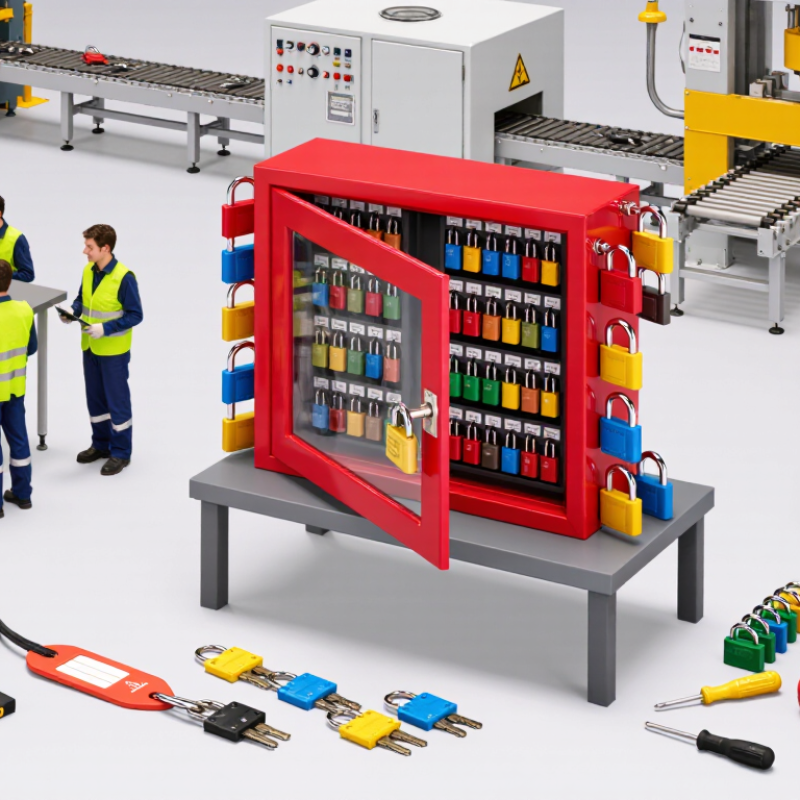
Table of Contents [Hide]
What a Safety Lockout Box Is and How It Works
Why Use a Safety Lockout Box for Workplace Safety?
A safety lockout box is a controlled container for keys used during equipment isolation. It supports group lockout procedures when several workers service one machine. An authorized worker first identifies electrical, hydraulic, pneumatic, thermal, or mechanical energy sources. The equipment is then shut down, isolated, and verified. Each worker places a personal lock on the box before starting work. The machine cannot restart until every personal lock is removed.
This process creates a visible chain of control. A supervisor can see who remains exposed without relying on memory or verbal updates. Inside the box, the primary isolation keys remain inaccessible during maintenance. Tags can identify the equipment, isolation date, and responsible workers. According to the U.S. Occupational Safety and Health Administration, effective lockout/tagout practices may prevent about 120 fatalities and 50,000 injuries annually. Those figures show why a simple box can support a serious energy-control system.
It is not foolproof. Poor training, unclear procedures, or a missing personal lock can still create danger. A worker should test for zero energy before touching the equipment, even when the box appears secure. Human assumptions cause problems. In real workplaces, worn locks, crowded key cabinets, and rushed shift changes deserve attention. OSHA’s Control of Hazardous Energy standard, 29 CFR 1910.147, also requires documented procedures, training, and periodic inspections. The box is only one part of that discipline.
Brands
Proudly Trusted by Top Suppliers Worldwide







Let us know and we will automate, together to fit your industrial needs.
 +91-97254 16844
Clients
Proudly Trusted by Top Companies Worldwide


Do you need Help? Get in touch.
X
Please fill out the form below and we will get back to you as soon as possible.