o
p
t
i
m
a
r
o
b
o
t
i
c
s

Make a Call


Make a Call
Blogs
Why Do You Need a Water Meter?
A Water Meter may look like a small brass fitting beside a wall or under a pavement cover. Yet its readings can explain why a monthly bill changed, reveal steady overnight use, and help a household spot a leak before damp patches appear. Amy Vickers, a water-conservation specialist and author of Handbook of Water Use and Conservation, has written extensively about measuring water use. A concise summary of that practical idea—not a verbatim quotation—is: “Measure use before trying to change it.” The distinction matters: an invented quotation should not be presented as her exact words.
For homeowners, a meter records the volume passing through a service line. Readings can make everyday habits more visible: a running toilet, a long shower, or a garden hose left trickling. Small clues matter. Comparing readings over time is often more useful than staring at one number. A meter does not explain every unusual bill, though. Leaks beyond the meter, estimated readings, or a misread display can complicate the picture. Check the device instructions and ask the water provider how readings are collected. Keep a simple record; dates and numbers help.
This guide explores how a Water Meter works, what its readings can tell you, and when those readings deserve a closer look. It also covers practical limits. A meter is useful, not magical. And one quiet night of high usage may be a clue—not proof—so confirm the pattern before drawing conclusions.
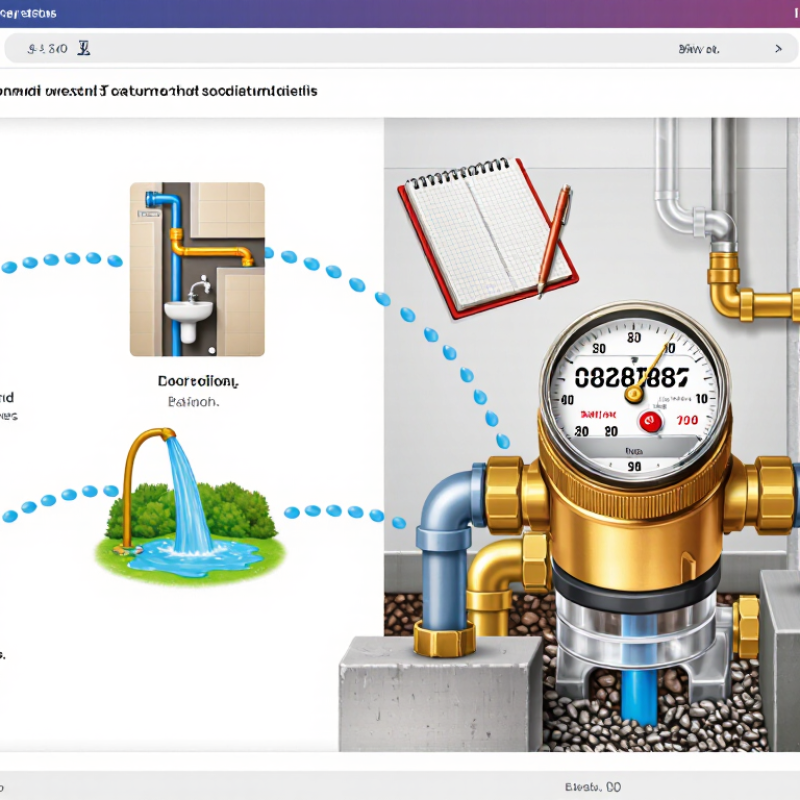
Table of Contents [Hide]
What a Water Meter Measures
Why Do You Need a Water Meter?
What a Water Meter Measures
A water meter records the volume of water that passes through a pipe into a building. It does not measure water quality. Most meters display a running total in gallons or cubic feet, while some use cubic meters. The exact unit depends on the meter and local utility. Small numbers may show fractions of a unit. Check the labels before comparing readings.
The register changes as water flows through the meter. A shower, washing machine, or dripping tap can all move the reading, though at very different rates. Some newer meters also report near-real-time flow, but many only show cumulative use. A meter is not a leak detector. Still, an unexpected increase can be a useful clue. Try recording the reading, avoiding water use for a short period, then checking again. Results can be confusing if appliances run automatically.
Readings help households and utilities track consumption and calculate bills. To compare use fairly, note the date, time, and displayed units each time. A few digits can matter. It is easy to misread a small decimal or overlook a unit change, so check the meter’s markings and billing information. If the display is unclear, ask the utility how that meter should be read.
Brands
Proudly Trusted by Top Suppliers Worldwide







Let us know and we will automate, together to fit your industrial needs.
 +91-97254 16844
Clients
Proudly Trusted by Top Companies Worldwide


Do you need Help? Get in touch.
X
Please fill out the form below and we will get back to you as soon as possible.