o p t i m a r o b o t i c s

Blogs

10 Best Robot Technology Suppliers for Global Buyers?

Selecting the 10 best robot technology suppliers for global buyers requires more than comparing product catalogs. A robot may look impressive in a showroom, yet struggle with dust, uneven floors, or a changing production line. Buyers should examine payload, reach, repeatability, software compatibility, safety certification, spare-parts access, and local technical support. Total cost matters too, including integration, training, maintenance, and downtime.

Industry data shows why this decision deserves careful research. The International Federation of Robotics reported 541,302 industrial robot installations worldwide in 2023, with more than 4.28 million robots operating globally. Its World Robotics 2024 report also identified Asia as the dominant installation market, while Europe and the Americas maintained strong automation demand. These figures suggest a mature, expanding industry, not a temporary technology trend. However, market size does not automatically prove supplier quality.

This guide evaluates leading suppliers through practical criteria used by experienced engineering and procurement teams. It considers application range, deployment history, controller performance, integration ecosystems, cybersecurity practices, and after-sales responsiveness. Independent evidence, including IFR statistics, company technical documentation, and credible customer case studies, supports the comparison. Still, every ranking has limits. A supplier that excels in automotive welding may not suit warehouse picking or laboratory automation. Real conditions matter.

Expect a balanced review, not a perfect answer. The strongest choice depends on your product, workforce, facility, and expansion plans. Check the details carefully. A reliable robot is only one part of a reliable automation system.
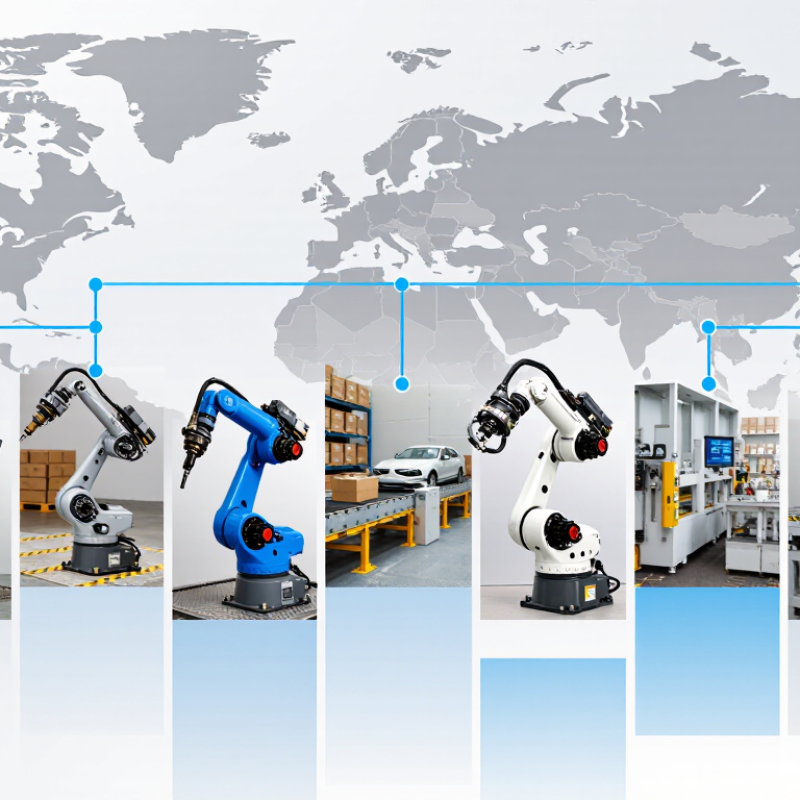
10 Best Robot Technology Suppliers for Global Buyers?

What Defines a Reliable Robot Technology Supplier?

10 Best Robot Technology Suppliers for Global Buyers?

What Defines a Reliable Robot Technology Supplier?

Reliable robot technology suppliers prove their value beyond polished demonstrations. A factory visit can reveal more than a sales presentation. Watch engineers adjust motion paths, inspect cable routing, and record cycle times on the production floor. Ask for performance data from applications similar to yours. Payload, reach, repeatability, and operating temperature should be clearly documented. Vague promises create costly surprises.

Technical expertise also appears in practical support. A capable supplier studies your layout, material flow, tooling, and maintenance skills before proposing equipment. They explain integration limits in plain language. Their documentation should include installation steps, safety procedures, software updates, and spare-part availability. Request references from comparable facilities, not only large showcase projects. Real operating feedback often exposes details that brochures miss.

Trust requires evidence. Review relevant safety certifications, quality controls, cybersecurity practices, and independent test records. Ask who responds when a robot stops at 2 a.m. A clear escalation process matters. No supplier is flawless. A credible one admits limitations and explains corrective actions. I would rather hear an uncomfortable answer than accept an impressive forecast. Pilot testing can reveal unexpected vibration, operator training gaps, or slower changeovers. Those findings are not failures; they are useful evidence before a larger investment.

Core Robot Technologies and Product Categories

Core Robot Technologies and Product Categories

For global buyers, robot selection starts with the application, not the sales brochure. Industrial arms handle welding, assembly, painting, and palletizing. Collaborative robots support lighter tasks beside trained operators. Mobile robots move bins across warehouses, while autonomous platforms inspect floors, shelves, or outdoor assets.

The core technologies deserve close attention. Motion controllers coordinate motors, encoders, and safety limits. Vision systems use cameras, depth sensors, and lighting to identify parts accurately. End effectors include grippers, suction cups, welding tools, and inspection probes. Modern robots also depend on reliable software, industrial communication, battery systems, and cybersecurity controls.

A five-axis arm may look capable, yet its repeatability can change with payload, heat, and mounting quality.

Product categories should match measurable production needs. Check reach, payload, cycle time, accuracy, operating temperature, and service access. Ask for test data using your actual materials.

Small details matter. A dusty packing line can expose weak seals within weeks.

Integration is often harder than purchasing the robot. This is where buyers sometimes underestimate labor, training, spare parts, and local technical support.

I have seen attractive specifications fail during real shift changes because tooling was awkward or recovery procedures were unclear.

A practical trial, documented maintenance plan, and transparent warranty reduce that risk.

Perfect automation is rarely realistic. Reliable improvement is the better target.

How to Evaluate Suppliers for Global Purchasing

10 Best Robot Technology Suppliers for Global Buyers?

How to Evaluate Suppliers for Global Purchasing

Choosing a robot supplier requires more than comparing catalog prices. I review technical records, factory capability, service coverage, and communication habits. A polished website proves very little. Ask for production photos, test procedures, and recent delivery references.

Request a sample unit or a controlled pilot before signing a large contract. Check cycle time, positioning accuracy, payload stability, safety functions, and software access. Measure performance under your actual conditions, including dust, temperature, voltage, and shift length. One supplier may perform well in demonstrations but struggle during continuous operation. That gap matters.

Evaluate export experience through documents, not promises. Confirm packaging methods, spare-part availability, training plans, warranty terms, and response times. Clarify who handles installation, remote support, and local compliance checks. Compare total ownership cost over three years, including maintenance and downtime. The cheapest quotation may become expensive after one failed controller.

Speak with engineers, not only sales staff. Their answers reveal practical expertise. Ask how they investigate faults and update firmware. I have seen purchasing teams overlook small details, such as connector standards or operator language. That mistake is easy to prevent, but often discovered too late. Keep every specification in writing, and challenge unclear claims before payment milestones are approved.

Ten Leading Robot Technology Suppliers Worldwide

The ten leading robot technology suppliers worldwide are best judged by capability, reliability, and local support.

A useful shortlist includes industrial-arm manufacturers, collaborative-robot specialists, mobile-robot developers, machine-vision providers, controller makers, gripper suppliers, simulation platforms, safety-system companies, system integrators, and lifecycle-service firms. Together, these suppliers cover welding, assembly, inspection, warehouse movement, and human-machine collaboration.

Industry data shows why this market matters. The International Federation of Robotics reported 541,302 industrial robot installations worldwide in 2023, while the global operational stock exceeded 4.28 million units. Asia represented the largest installation region. The World Robotics 2024 report also identified electronics, automotive, and metal industries as major demand centers. Suppliers with tested integration methods, documented safety practices, and multilingual service teams usually offer stronger value than suppliers focused only on hardware.

Selection still requires caution. A supplier may show impressive accuracy in a laboratory but struggle with dust, variable lighting, or frequent product changes. The International Federation of Robotics recommends evaluating risk, training, maintenance, and application suitability, not only robot speed. The ten strongest global suppliers should provide measurable cycle-time results, spare-parts access, software compatibility, and transparent warranty terms. The ranking remains imperfect. Buyers should request production-site references, inspect failure records, and run a controlled pilot before making a large investment.

International Procurement, Compliance, and Support Considerations

International procurement of robot systems requires more than comparing cycle times and purchase prices. The International Federation of Robotics reported 541,302 industrial robots installed worldwide in 2023. That scale increases demand for reliable documentation, traceable components, and local technical support. Global buyers should assess supplier experience with export paperwork, customs classification, electrical requirements, and language-specific manuals. Compliance failures can delay a production line for weeks.

Safety evidence matters. Suppliers should provide risk assessments, emergency-stop details, machine documentation, and testing records aligned with relevant ISO standards, including ISO 10218 and ISO/TS 15066 where collaborative applications apply. Support must also be measurable. Ask about spare-part response times, remote diagnostics, technician coverage, training hours, and software update policies. A low quotation may hide expensive integration work. That is the uncomfortable part.

Tips: Request a sample compliance file before signing. Check serial-number traceability. Confirm who handles import duties and site acceptance. Require service-level terms in writing. Compare total ownership cost over five years, not only the equipment invoice. The process will not be perfect. Build room for corrective actions.

10 Best Robot Technology Suppliers for Global Buyers: Procurement Evaluation Priorities

For international procurement, buyers typically assess more than robot performance alone. This weighted framework emphasizes technical capability, regulatory compliance, supply reliability, total cost, and after-sales support when comparing potential suppliers across global markets.

Brands

Proudly Trusted by Top Suppliers Worldwide

Let us know and we will automate, together to fit your industrial needs.

Clients

Proudly Trusted by Top Companies Worldwide

Do you need Help? Get in touch.

X

Please fill out the form below and we will get back to you as soon as possible.

    Subscribe our newsletter & get updates