o
p
t
i
m
a
r
o
b
o
t
i
c
s

Make a Call


Make a Call
Blogs
China Top Collaborative Robot Arm Manufacturers?
China’s collaborative robot arm market has grown from small automation projects into a serious manufacturing ecosystem. Many suppliers now serve electronics, packaging, welding, assembly, and machine-tending applications. However, identifying the top collaborative robot arm manufacturers requires more than comparing website claims.
A reliable review should examine payload, reach, repeatability, programming methods, safety functions, and service coverage. A 10-kilogram payload may suit machine tending, while a lighter arm can fit beside workers on a compact assembly line. Details matter. Buyers should also inspect force sensing, collision detection, end-effector compatibility, IP ratings, and integration with PLC systems. Factory demonstrations can reveal practical issues, such as cable routing, recovery after an emergency stop, or how quickly operators learn the interface.
Manufacturer experience is equally important. Evidence may include deployed systems, documented testing, training resources, spare-parts availability, and support response times. Relevant safety practices should align with recognized industrial standards and local compliance requirements. Yet rankings are never perfectly fixed. A supplier with excellent hardware may have limited overseas service, while a smaller company may offer faster engineering support. That uncertainty matters.
This guide will compare leading Chinese manufacturers through technical capability, application experience, product reliability, and customer support. Public specifications will be treated carefully, not as unquestioned proof. Independent testing and user feedback remain valuable. The strongest choice depends on the production task, budget, workforce, and expansion plans—not on a product brochure alone. Expect useful comparisons, but also a few unanswered questions.
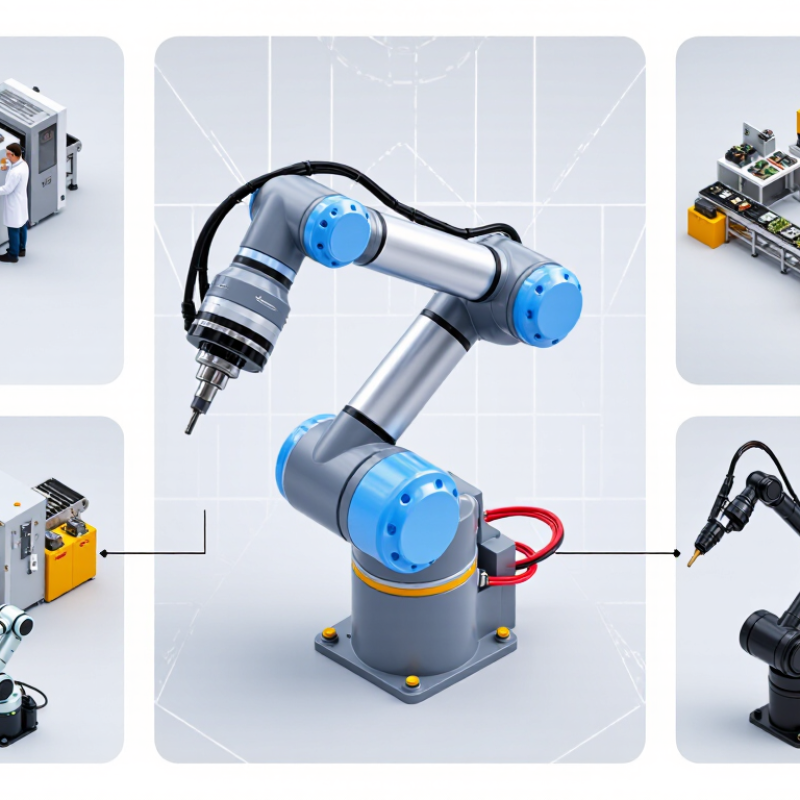
Table of Contents
[Hide]
What Are Collaborative Robot Arms and How Do They Work?
Collaborative robot arms, often called cobots, are robotic manipulators designed to share workspaces with people. Unlike traditional industrial robots, they use sensors, speed limits, and force monitoring to reduce injury risks. A typical arm has several motorized joints, a controller, a tool, and software. The tool may grip a part, guide a drill, or move a camera. Their value is practical.
An operator usually teaches a task by moving the arm or selecting programmed points. The controller converts those instructions into coordinated joint movements. During operation, torque sensors and joint feedback detect unusual resistance. If contact or a sudden load appears, the arm can slow or stop. However, “collaborative” does not mean automatically safe in every situation. A risk assessment must consider payload, tool shape, speed, workspace, and human behavior.
In workshops, cobots often handle machine tending, inspection, packaging, and repetitive assembly. They can improve consistency while allowing workers to focus on judgment-heavy tasks. Yet setup is rarely effortless. Poorly chosen grippers, awkward reach, or weak programming can create delays. Field testing often shows that small changes in part placement matter more than expensive hardware. The technology also has limits. Heavy loads, unstable parts, and highly variable work may require another system. Careful testing and trained operators remain essential.
China Top Collaborative Robot Arm Manufacturers? - What Are Collaborative Robot Arms and How Do They Work?
| Evaluation Dimension | Collaborative Robot Arm Category | Typical Payload | Typical Reach | Typical Repeatability | How It Works | Common Applications | Key Purchasing Considerations |
|---|---|---|---|---|---|---|---|
| Compact desktop cobot | Light-duty six-axis collaborative arm | Approximately 0.5–5 kg | Approximately 500–900 mm | Approximately ±0.02–0.05 mm | Uses servo motors, joint encoders, and force or torque monitoring to control movement around operators. | Small-part assembly, inspection, laboratory handling, screwdriving, and light pick-and-place tasks. | Check footprint, end-effector compatibility, programming method, and suitability for limited workspaces. |
| General-purpose cobot | Medium-payload six-axis collaborative arm | Approximately 5–12 kg | Approximately 800–1,500 mm | Approximately ±0.03–0.10 mm | Coordinates multiple joints through a robot controller while adjusting speed, force, and position according to programmed limits. | Machine tending, packaging, palletizing, welding assistance, dispensing, and material handling. | Compare payload at full extension, cycle time, safety functions, controller usability, and available accessories. |
| High-payload cobot | Reinforced collaborative arm for heavier tooling or workpieces | Approximately 12–30 kg | Approximately 1,000–1,800 mm | Approximately ±0.05–0.15 mm | Combines higher-capacity motors and mechanical joints with monitored speed, separation, and force-limiting functions. | Heavy machine tending, case packing, palletizing, welding, and handling of larger components. | Verify stopping distance, mounting strength, floor space, energy consumption, and risk assessment requirements. |
| Long-reach cobot | Collaborative arm optimized for extended workspace coverage | Approximately 5–20 kg | Approximately 1,500–2,000 mm | Approximately ±0.05–0.15 mm | Uses coordinated joint motion to reach larger work envelopes while maintaining programmed operating limits. | Large-machine tending, loading and unloading, packaging, welding, and multi-station handling. | Assess deflection at maximum reach, installation height, cable routing, and reachability around obstacles. |
| Mobile collaborative arm | Cobot mounted on a wheeled autonomous or manually movable platform | Arm payload commonly ranges from 3–20 kg | Arm reach commonly ranges from 700–1,800 mm | Depends on arm and mobile-platform design | Combines arm motion with mobile navigation, onboard sensors, battery management, and location or docking functions. | Flexible machine tending, warehouse handling, inspection routes, and production lines with changing layouts. | Evaluate navigation accuracy, battery runtime, docking repeatability, platform stability, and wireless integration. |
| Food, pharmaceutical, or clean-production cobot | Collaborative arm configured for hygienic or controlled environments | Commonly 3–12 kg, depending on the application | Commonly 700–1,500 mm | Often approximately ±0.03–0.10 mm | Provides the same force-monitored robot motion while using suitable surface materials, sealing, lubrication, or cleaning procedures. | Food handling, laboratory automation, medical-product packaging, and clean assembly. | Confirm ingress protection, cleanability, surface finish, approved lubricants, and applicable hygiene requirements. |
| Safety and compliance | Applicable to all collaborative robot arm categories | Not a payload classification | Not a reach classification | Not a precision classification | Collaborative operation may use safety-rated monitored stop, hand guiding, speed and separation monitoring, or power and force limiting. | Shared workspaces where the robot and operator perform related tasks, subject to application-specific risk assessment. | Review ISO 10218-1, ISO/TS 15066, local machinery regulations, safeguarding, stopping performance, and task-specific hazards. |
| Programming and integration | Common feature across modern collaborative robot arms | Depends on the selected arm and tooling | Depends on the selected arm and mounting position | Depends on the robot, tool, payload, and operating conditions | Programs may be created through a graphical interface, teach pendant, hand-guiding, simulation software, or industrial communication protocols. | Rapid deployment, batch production, line changeovers, quality inspection, and repetitive material handling. | Compare PLC communication, fieldbus support, vision integration, digital I/O, software updates, and operator training. |
| End-effector compatibility | Gripper, vacuum tool, welding torch, screwdriver, dispenser, or inspection tool | Tool weight must be included in the total payload | Effective reach changes with tool geometry | Tool compliance can affect practical accuracy | The robot sends motion and I/O commands to the tool while monitoring the combined load and operating conditions. | Part gripping, fastening, dispensing, surface finishing, welding, inspection, and packaging. | Check tool weight, center of gravity, pneumatic or electrical utilities, automatic tool changing, and collision behavior. |
| Overall selection benchmark | Best-fit collaborative robot arm for a specific production task | Payload should exceed the combined workpiece and tool load with an appropriate margin | Reach should cover all required positions without operating at the mechanical limit | Required accuracy depends on the process and vision or fixturing system | Performance results from the combined design of mechanics, motors, sensors, controller software, tooling, and application setup. | Manufacturing, logistics, electronics, automotive components, food processing, and general industrial automation. | Prioritize total cost of ownership, local technical support, spare parts, training, warranty, integration capability, and validated application performance. |
Note: The figures above are typical industry ranges for preliminary comparison. Actual payload, reach, repeatability, speed, safety performance, and environmental suitability vary by model, tooling, mounting method, programming, and application-specific risk assessment.
Related Posts
-

How to Choose a Collaborative Robot Arm in 2026?
-

Top Tips for Utilizing Collaborative Robots at Canton Fair 139?
-

Top 10 Robotics Stocks to Watch in 2026 for Investors?
-

10 Best Robotic Solutions Transforming Industries in 2023
-

How to Choose a Security Robot in 2026?
-

Why Are Cobot Universal Robots Revolutionizing the Future of Automation
Brands
Proudly Trusted by Top Suppliers Worldwide







Let us know and we will automate, together to fit your industrial needs.
 +91-97254 16844
Clients
Proudly Trusted by Top Companies Worldwide


Do you need Help? Get in touch.
X
Please fill out the form below and we will get back to you as soon as possible.