Top 10 Universal Robot Arm Options for Global Buyers?
The rise of automation has transformed industries worldwide. Among the tools that lead this change is the universal robot arm. These robotic arms offer flexibility, precision, and efficiency across various applications, from manufacturing to healthcare.
In today’s market, countless options exist for buyers seeking the best universal robot arm. Each model boasts unique features suited for different tasks. Buyers often feel overwhelmed by the choices available. Selecting the right robotic arm is crucial, as it directly impacts productivity and operational success.
This article will explore the top 10 universal robot arm options, highlighting their strengths and weaknesses. Understanding these aspects can help buyers decide which arm fits their needs best. With careful consideration, companies can thrive in a competitive environment by leveraging the right universal robot arm.

Top 10 Universal Robot Arm Options for Global Buyers
When considering robotic arms, global buyers must look into various factors. Universal robot arms come with distinct features that cater to diverse industries. Each option can handle tasks ranging from assembly lines to delicate handling of fragile items. This versatility is crucial in a constantly evolving market. Companies often focus on aspects like payload capacity, reach, and precision.
In today’s competitive environment, some buyers may overlook the importance of service support. An excellent robot arm is more than just the hardware. It’s about the available resources for maintenance and training. Additionally, platforms often require updates for software. Buyers might reflect on their long-term needs. A robotic arm that meets current demands may not suffice for future challenges. Technical specifications evolve, and so do industry standards.
Customization remains a pivotal factor in the choice of robotic arms. Some users might desire tailor-made solutions to address specific challenges. However, along with benefits come considerations about installation and integration. The learning curve can sometimes impede immediate productivity. Buyers should evaluate whether they have adequate expertise in-house. Balancing initial costs with potential returns is vital. It's essential to think critically about the total ownership experience before making a choice.
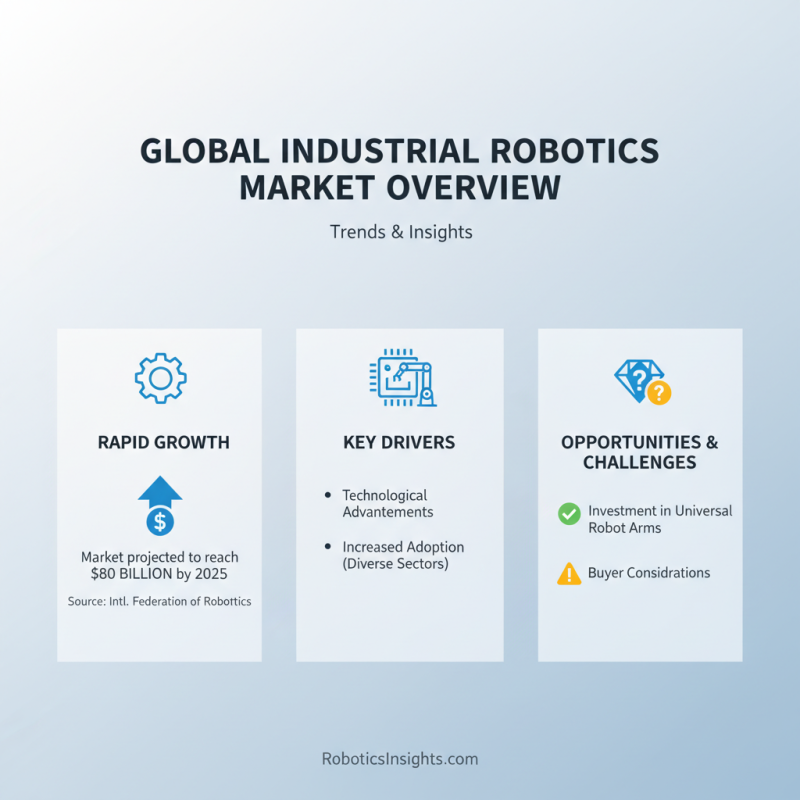
Overview of the Global Industrial Robotics Market: Trends & Insights
The global industrial robotics market is experiencing rapid growth, driven by advancements in technology and increased adoption in diverse sectors. According to a report by the International Federation of Robotics, the market is projected to reach $80 billion by 2025. This growth presents both opportunities and challenges for buyers looking to invest in universal robot arms.
A significant trend in the market is the rise of collaborative robots, or cobots. These robots are designed to work alongside human operators. They are safer and easier to program than traditional industrial robots. Their integration into manufacturing processes can lead to increased productivity. However, buyers must also consider the learning curve associated with these technologies. A study indicates that around 30% of companies struggle with the implementation phase. This can impact ROI and productivity if not addressed properly.
Another concern is the supply chain. The pandemic exposed vulnerabilities in sourcing components for robotic systems. Companies are now urged to rethink their supply chains for resilience. Reports suggest that 40% of manufacturers are diversifying suppliers to mitigate risks. This shift may well affect pricing and availability in the near future. Buyers should remain aware of these dynamics to make informed purchasing decisions.
Key Features to Consider When Choosing a Universal Robot Arm
When selecting a universal robot arm, several key features are essential for making an informed decision. Payload capacity is crucial; it directly impacts the types of tasks the arm can handle. For instance, an arm with a 5 kg payload may limit its utility in heavy assembly jobs. In contrast, systems that can carry 10 kg offer more versatility across industries.
Another important factor is the reach of the robot arm. A unit with a 1,000 mm reach can service larger workspaces than one with 600 mm. This difference might dictate its effectiveness in specific setups, such as automotive or electronics manufacturing. According to industry reports, companies often underestimate the importance of this specification, leading to inefficiencies.
Precision and repeatability are also vital. A robot arm that boasts a precision of ±0.1 mm is more reliable for tasks requiring accuracy, such as surgical applications. However, many businesses overlook fine tolerances, risking costly errors in production. Additionally, programming capabilities contribute to the ease of integration. A user-friendly interface can significantly reduce training time, enhancing overall productivity. Evaluating these aspects is necessary to ensure the investment aligns with operational needs.
Comparison of Leading Universal Robot Arm Brands and Models
When considering robotic arms, various brands and models emerge as frontrunners. Their capabilities often depend on specific applications. Different arms excel at tasks like precision assembly or heavy lifting. Understanding these differences is crucial for buyers seeking optimal performance.
Many models feature user-friendly interfaces. Some are designed for quick programming, allowing users with minimal experience to operate them effectively. However, not all models deliver on this promise. Limited support or complicated software can hinder usability. Buyers should scrutinize reviews and technical support options before purchasing.
Safety features also differ widely among models. While some arms include advanced sensors, others may only offer basic protections. Evaluating safety is essential, especially in collaborative environments. Buyers must weigh the benefits against potential risks carefully. Each option presents unique strengths and weaknesses that require in-depth consideration.
Top 10 Universal Robot Arm Options for Global Buyers
This chart compares the load capacity (in kilograms) and reach (in millimeters) of the top 10 universal robot arms without revealing brand names. The data helps potential buyers assess the capabilities of these options based on key specifications.
Case Studies: Successful Implementations of Universal Robot Arms
The implementation of universal robot arms has transformed various industries, from manufacturing to healthcare. Case studies reveal their significant impact, such as a factory that increased productivity by 50% after integrating robotic arms. According to the International Federation of Robotics, the annual growth rate for robot installations is projected to reach 14% by 2025. This trend highlights the rising demand for flexible automation solutions.
In healthcare, robotic arms have successfully assisted in surgeries. One notable case involved a hospital that utilized robotic systems for precise surgical procedures. This led to a 30% reduction in recovery time for patients. However, there are challenges. Training staff to operate these systems can be resource-intensive. Some facilities still face integration issues within existing workflows. Optimizing the use of robotics demands ongoing evaluation.
While many companies see a positive return on investment, not every implementation meets expectations. Some businesses report initial automation savings being offset by maintenance costs. It's essential to weigh benefits against potential pitfalls. Understanding these complexities aids informed decisions when adopting universal robot arms.
Conclusion
The article titled "Top 10 Universal Robot Arm Options for Global Buyers" provides a comprehensive overview of the current landscape of the global industrial robotics market, highlighting key trends and insights. It emphasizes the importance of selecting the right universal robot arm by outlining the key features buyers should consider, such as payload capacity, precision, and ease of programming.
Additionally, the article presents a comparative analysis of leading universal robot arm brands and models, complemented by case studies that showcase the successful implementations of these robotic arms across various industries. Looking ahead, the article discusses future trends in universal robotics, anticipating innovations that could revolutionize automation and enhance productivity in the manufacturing sector. Overall, this resource serves as a valuable guide for global buyers seeking effective and versatile automation solutions through universal robot arms.