o p t i m a r o b o t i c s

Blogs

Why Is Robot Programming Important for Global Buyers?

Why Is Robot Programming Important for Global Buyers?

For global buyers, robot programming is more than a technical specification. It directly affects production speed, product quality, worker safety, and long-term operating costs. A robot may look impressive in a supplier’s showroom, yet performance depends on its programs, sensors, tooling, and integration. A welding robot, for example, must follow accurate paths across thousands of repeated joints. Small programming errors can create uneven welds, material waste, or expensive downtime. Reliable programming also helps robots handle product changes without requiring complete equipment replacement.

Experienced buyers should examine how suppliers develop, test, document, and maintain robot programs. Clear interface design matters. So do simulation records, backup procedures, training plans, and remote support. Buyers should ask whether programs can communicate with existing production systems. They should also confirm compliance with applicable safety and technical requirements in each market. These checks reveal a supplier’s practical capability better than promotional claims. Evidence matters.

However, robot programming is not a universal solution. Poorly defined production goals can lead to costly automation. A faster cycle may reduce quality or increase maintenance demands. Integration can also take longer than expected. That reality is easy to underestimate. Careful factory trials, acceptance testing, and operator feedback reduce these risks. Buyers should request measurable results, such as cycle time, defect rates, changeover duration, and recovery time after faults. Mistakes happen. The strongest suppliers acknowledge them, document lessons, and improve the system. For international purchasing teams, this transparency builds trust and supports safer, more predictable investment decisions.
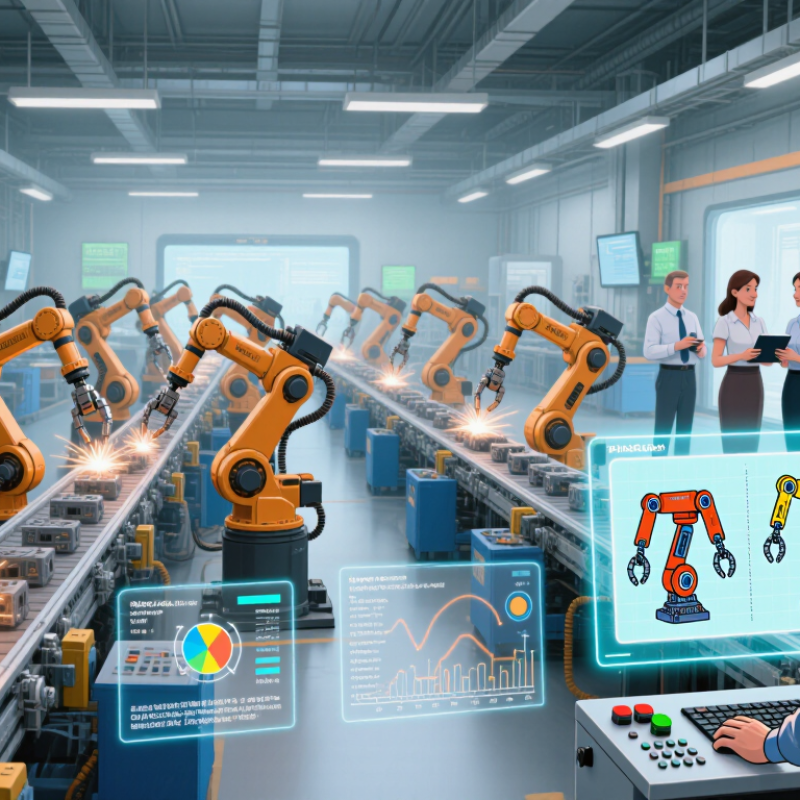
Why Is Robot Programming Important for Global Buyers?

What Robot Programming Means in Modern Industrial Automation

Why Is Robot Programming Important for Global Buyers?

In modern industrial automation, robot programming is the practical language between equipment and production goals. It converts drawings, process data, and safety limits into controlled movement. A programmer defines speed, position, tool angles, gripping force, and timing. These details determine whether a robot welds, sorts, assembles, or handles materials consistently. It is repeatable motion.

For global buyers, strong programming supports stable quality across different factories and working conditions. A well-structured program can adjust to product size, conveyor speed, or fixture changes without rebuilding the entire process. It also helps operators understand alarms through clear instructions and readable logic. Small timing errors matter. A two-second delay may create bottlenecks during a busy shift.

Professional programming includes simulation, offline testing, safety checks, and real production trials. Engineers review collision risks, reach limits, recovery steps, and communication with other machines. Logs can reveal unusual vibration or repeated positioning errors before defects increase. Still, no program is perfect. A developer may overlook dust, lighting changes, or an operator’s practical habit. That weakness needs honest review. In my view, the best systems leave room for adjustment, record every change, and train local teams to diagnose ordinary problems. Without that human feedback, advanced automation can become precise but frustrating.

Why Is Robot Programming Important for Global Buyers?

What Robot Programming Means in Modern Industrial Automation

Robot programming determines how industrial robots move, interact with equipment, respond to production conditions, and maintain safe and repeatable operations. The table below summarizes the main programming dimensions global buyers should evaluate before purchasing an automation system.

Programming Dimension What It Means Common Industrial Data or Standard Buyer Value Evidence to Request
Robot Motion Control Defines joint movement, speed, acceleration, positioning, and coordinated multi-axis motion. Industrial robots commonly use 4 to 6 controlled axes; performance is often evaluated through pose accuracy, repeatability, and path accuracy. Supports consistent cycle times, stable product quality, and predictable production planning. Motion specifications, repeatability data, cycle-time study, and sample program for the intended payload and reach.
Teach Pendant Programming Operators create or modify robot positions and sequences directly through a handheld programming device. Suitable for point-to-point tasks, position updates, tool setup, and maintenance adjustments. Enables local troubleshooting and reduces dependence on external programming resources for routine changes. Operator interface language options, user-access levels, backup procedures, and training requirements.
Offline Programming Robot paths and production sequences are developed or simulated on a computer before being transferred to the physical cell. Useful for layout validation, reachability checks, collision analysis, and production-line planning. Can reduce physical commissioning work and allows programming while the existing line continues operating. Simulation workflow, digital model requirements, post-processor compatibility, and program-transfer process.
PLC and Peripheral Integration Connects the robot program with sensors, conveyors, safety devices, tooling, vision systems, and plant-control equipment. Common industrial interfaces include discrete I/O, industrial Ethernet, and OPC UA-based data exchange. Improves synchronization, traceability, fault handling, and compatibility with multi-vendor production systems. Communication architecture, supported protocols, I/O list, handshake sequence, and fault-recovery logic.
Safety Programming Defines safe speed, safe position, emergency behavior, access control, restart conditions, and interaction with protective devices. Industrial robot applications are commonly assessed against ISO 10218 safety requirements and risk-assessment principles. Helps protect personnel, supports regulatory compliance, and reduces unplanned stoppages caused by unsafe operating conditions. Risk assessment, safety circuit diagram, validation records, emergency-stop behavior, and restart procedure.
Vision-Guided Programming Uses cameras or other sensing devices to identify part location, orientation, defects, or assembly conditions. Typical data includes object coordinates, orientation angles, inspection results, and pass/fail signals. Supports mixed-product production, variable part presentation, inspection, and reduced fixture dependence. Detection accuracy, lighting conditions, calibration method, response time, and exception-handling logic.
Changeover and Recipe Management Stores product-specific positions, speeds, tooling settings, process parameters, and inspection rules. A recipe may contain tool data, work-object data, motion points, process values, and product identifiers. Makes the automation system more adaptable to small batches, product variation, and regional production requirements. Recipe access control, change history, backup method, version management, and documented changeover procedure.
Diagnostics and Data Logging Records alarms, cycle data, program states, part counts, downtime causes, and maintenance information. Useful indicators include cycle time, availability, fault frequency, mean time between failures, and mean time to repair. Provides measurable evidence for continuous improvement, maintenance planning, and total-cost analysis. Alarm history, data-export format, dashboard examples, user permissions, and remote-support capabilities.
Maintainability and Workforce Skills Covers program readability, documentation, backup, troubleshooting, training, and the availability of qualified personnel. IEC 61131-3 defines widely used programmable-controller programming languages, including structured text, ladder diagram, and function block diagram. Reduces long-term dependence on a single integrator and improves support across multiple production locations. Programming manuals, code standards, training plan, spare-part strategy, backup files, and support response process.
Key Buyer Takeaway: Robot programming is not limited to writing movement commands. It is the control layer that connects robot motion, safety, production equipment, data systems, and workforce capabilities. Buyers should evaluate programming openness, documentation, integration standards, cybersecurity controls, and long-term maintainability alongside robot payload and reach.

How Robot Programming Improves Production Efficiency and Accuracy

Why Is Robot Programming Important for Global Buyers?

How Robot Programming Improves Production Efficiency and Accuracy

Effective robot programming turns a production plan into consistent machine movement. It controls speed, position, timing, tool angles, and material handling. For global buyers, this consistency supports stable output across different shifts and facilities. Small errors matter.

A well-programmed robot can repeat a welding, packing, or assembly path with minimal variation. Engineers can test movements through simulation before production begins. This helps reduce collision risks, setup delays, and unnecessary material waste. Cycle-time data also shows where production slows down. Buyers should request clear performance records, not only attractive claims.

Accuracy depends on more than software. Calibration, fixture quality, sensor condition, and operator training affect the final result. A program may work perfectly in testing but struggle when parts vary slightly. This is often overlooked. Regular inspections and controlled adjustments help maintain reliable performance over time. Global buyers should also confirm language support, maintenance procedures, safety validation, and integration requirements before purchasing. A practical acceptance test can compare programmed positions with actual measurements. It can also reveal problems that a demonstration hides.

Robot programming is powerful, but it is not magic. Good results require careful engineering, realistic production data, and continuous review.

The Role of Programming in Flexible and Scalable Manufacturing

Robot programming is central to flexible and scalable manufacturing. It determines how machines respond when products, materials, or order volumes change. Global buyers need more than fast equipment. They need systems that can adapt without extensive downtime.

A well-structured program lets one robot handle several tasks. Operators can adjust movement paths, gripping pressure, or inspection settings with controlled changes. A technician may switch between two product sizes during one shift. Clear instructions and documented parameters reduce training time across international teams. They also support safer commissioning and more consistent production results. Small changes matter.

Scalability depends on repeatable logic. When a factory adds another cell, engineers can reuse tested routines and safety checks. However, copied code is not automatically suitable for every site. Different layouts, sensors, and workforce skills can create unexpected faults. This is where careful validation becomes essential. Simulated cycles, sample runs, and operator feedback reveal practical weaknesses before full production.

Programming also affects maintenance. Diagnostic messages should identify problems without requiring advanced technical knowledge. Remote support can help, but local staff still need understandable records. A perfectly ambitious program may become difficult to manage. Simpler is often better, though not always enough. Global buyers should assess documentation, change control, training, and future product variation before approving a manufacturing solution.

Why Global Buyers Evaluate Robot Programming Capabilities

For global buyers, robot programming is more than a technical feature. It reveals whether an automation system can perform reliably across changing production conditions. A supplier may show a fast demonstration, but buyers need evidence from real workflows. Can the robot handle different part sizes, tool changes, and narrow tolerances? Clear programming methods also reduce commissioning time. This matters when engineers work across time zones and cannot visit the factory every week. In my experience, readable programs make troubleshooting less dependent on one specialist. That practical advantage is easy to underestimate.

Global buyers evaluate programming capabilities because production rarely stays identical. Materials vary. Fixtures move slightly. Operators request safer, simpler adjustments. A capable system should support structured routines, simulation, error handling, and documented interfaces. It should also allow trained local technicians to make controlled changes without creating hidden risks. Ask for sample code, training records, recovery procedures, and test results from similar applications. Watch how the supplier explains a fault at the work cell. Vague answers can signal weak support. Still, perfect demonstrations prove little. Real factories are messier, and small calibration issues can expose gaps that polished presentations conceal.

Tips: Request a live programming trial. Change one variable, such as part position, and observe the recovery process. Confirm version control, backup methods, access permissions, and remote support limits. Keep the evaluation practical. A short trial often reveals more than a long specification sheet.

Why Is Robot Programming Important for Global Buyers?

Global buyers evaluate robot programming capabilities because they directly affect deployment speed, production flexibility, system integration, safety validation, and long-term maintenance. This industry-neutral evaluation index uses a 0–100 scale to represent the relative importance of commonly specified programming capabilities in international robot projects. The criteria reflect established practices associated with robot safety, industrial communication, offline programming, simulation, and lifecycle support.

Key Factors for Selecting Programmable Robotic Systems

Programmable robotic systems matter because global buyers need flexibility, not only movement.

The International Federation of Robotics reported 541,302 industrial robots installed worldwide in 2023. That scale increases pressure on buyers to choose systems that adapt to changing products. A programmable robot should handle revised paths, varied gripping points, and new inspection rules without major hardware replacement. Look beyond advertised payload. Check repeatability, reach, cycle time, controller access, and programming effort. A ten-minute changeover can matter more than a higher top speed.

Interoperability deserves close attention.

The system should communicate with sensors, vision equipment, production software, and safety controls through recognized industrial protocols. Simulation tools can expose collisions before installation. Offline programming also reduces production interruptions. The Association for Advancing Automation reported 31,159 robots ordered by North American companies in 2023, worth about 1.87 billion US dollars. That investment makes long-term support, spare parts, training, and software updates practical selection criteria. A cheap purchase may become expensive when one technician understands the code.

Safety and cybersecurity require evidence, not promises.

Ask for risk assessments, access controls, audit logs, and documented compliance with applicable machinery standards. Test recovery after a power loss. Test it again with an unfamiliar operator. Perfect specifications rarely exist. A factory may accept slower motion when programming becomes clearer. Buyers should compare total ownership costs across five years, including integration, maintenance, energy, and retraining. Local service capability is useful, but it can still be overestimated during procurement. Use trial tasks, recorded cycle data, and independent acceptance checks before approving the system.

Brands

Proudly Trusted by Top Suppliers Worldwide

Let us know and we will automate, together to fit your industrial needs.

Clients

Proudly Trusted by Top Companies Worldwide

Do you need Help? Get in touch.

X

Please fill out the form below and we will get back to you as soon as possible.

    Subscribe our newsletter & get updates