o p t i m a r o b o t i c s

Blogs

China Best Cobot Universal Robots for Global Buyers?

Choosing the best cobot universal robots for global buyers requires more than comparing prices and payloads. It demands practical judgment. A machine that performs well in a clean automotive plant may struggle beside a dusty welding station or a crowded packaging line. Buyers should examine reach, repeatability, safety functions, software compatibility, maintenance access, training, and local technical support. The right choice depends on the task, not the marketing slogan.

Esben Østergaard, co-founder of Universal Robots, has said, “We are not trying to replace people. We are trying to make people more productive.” That principle remains important when evaluating cobot universal robots. These systems can support machine tending, assembly, inspection, and material handling. They can also reduce repetitive strain and help smaller factories adopt automation without redesigning every production cell. A short deployment time helps. So does intuitive programming.

However, the buying decision is not risk-free. A cobot may be easy to program, yet difficult to integrate with older equipment. A lower purchase price may hide costs for grippers, vision systems, guarding, software licenses, and service visits. Reality is messier. Buyers should request cycle-time tests using their own parts, not sample demonstrations. They should also speak with integrators who understand regional standards and workforce conditions.

This guide examines leading cobot universal robots for international buyers. It considers performance, usability, support, total ownership cost, and long-term flexibility. No platform fits every factory. That is worth remembering.
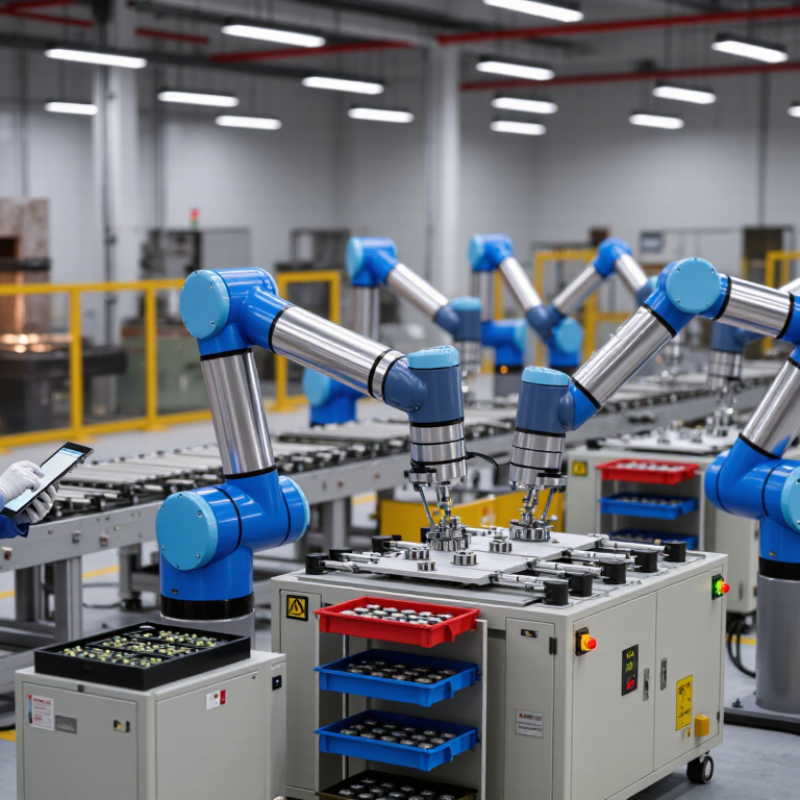
China Best Cobot Universal Robots for Global Buyers?

What Are Collaborative Robots and Why Do Global Buyers Compare Them?

Collaborative robots, often called cobots, are robotic arms designed to work near people in shared spaces. Unlike traditional industrial robots, they can use force sensing, speed limits, and monitored stops to reduce contact risks. Their purpose is not simply replacing workers. They often handle repetitive tasks such as machine tending, screwdriving, inspection, packaging, and light material transfer. A worker can guide a cobot, adjust a task, and return it to production without rebuilding an entire line. That practical flexibility explains why global buyers compare these systems carefully.

Buyers usually examine payload, reach, repeatability, cycle time, programming effort, and safety functions. Yet the specification sheet is only part of the decision. A cobot with impressive reach may occupy too much floor space. A low purchase price may hide installation, tooling, training, maintenance, and integration costs. Experienced teams test the robot with real parts, changing temperatures, awkward angles, and occasional product variation. They also check documentation, emergency procedures, spare-part access, and local technical support. These details reveal whether a system is reliable beyond a controlled demonstration.

Global comparison is difficult because factories have different labor skills, layouts, power standards, and regulatory expectations. Buyers should request traceable test results and confirm risk assessments with qualified safety professionals. No cobot is automatically safe for every application. That assumption is dangerous. Teams can underestimate gripper weight or changeover time. A pilot run exposes both problems early. The better question is not which cobot looks strongest, but which system fits the process, people, and long-term operating reality. Even that judgment may change after six months of production.

China Best Cobot Universal Robots for Global Buyers?

What Are Collaborative Robots and Why Do Global Buyers Compare Them?

Collaborative robots are designed to work near people with integrated safety functions and simplified programming. This buyer-oriented benchmark uses common commercial specification ranges: lighter cobots generally provide shorter reach and lower payload, while heavier models support machine tending, welding, and palletizing applications. Actual performance depends on the robot configuration, tooling, safety assessment, and operating environment.

The figures are representative market ranges and are not associated with any specific company or brand. Safety validation should follow applicable requirements, including ISO 10218 and ISO/TS 15066.

How Chinese Cobot Manufacturers Differ from Universal Robots

Chinese collaborative robot manufacturers often compete through customization, production scale, and pricing flexibility. Their products may offer similar payloads, reach, and force-limiting functions to established international systems. However, the engineering approach can differ considerably. Many Chinese suppliers adapt joints, controllers, and end-effectors for specific factory tasks. This helps when a buyer needs machine tending, packing, or inspection within a narrow workspace.

The purchasing experience also feels different. Chinese manufacturers may provide faster mechanical changes and more direct communication with factory engineers. A project manager can sometimes request a modified flange or software interface without a long approval chain. Cost is another advantage, especially for multi-unit deployments. Yet lower pricing deserves careful checking. Some suppliers have limited overseas service networks, uneven manuals, or fewer proven integrations. That creates risk during installation.

Reliable buyers should inspect more than the robot arm. Ask for repeatability data, safety test reports, cycle-time records, and customer references from similar industries. Check how the controller handles emergency stops, protective pauses, and recovery after power loss. Software usability matters too. A smooth demonstration can hide difficult programming later. The strongest Chinese manufacturers combine competitive hardware with documented testing, remote diagnostics, spare-parts planning, and local technical partners. Still, no supplier is perfect. A cheaper system may require more training, while a mature platform may cost more but reduce downtime. The right choice depends on verified performance, service access, and the buyer’s actual production conditions.

Which Technical Features Matter When Evaluating Cobots?

When evaluating collaborative robots, technical fit matters more than advertised payload. The International Federation of Robotics reported 541,302 industrial robot installations worldwide in 2023. China accounted for 276,288 units, showing strong regional demand for flexible automation. Yet market growth does not guarantee suitability.

Check payload at full reach, not only at the wrist. A six-kilogram rating may drop when tools extend 800 millimeters. Repeatability, joint speed, and cycle time should match the real task.

Force and torque sensing also matter during insertion, polishing, or hand-guided teaching. Ask for measured values, test conditions, and error ranges. Datasheets can look precise while hiding practical limits.

Safety functions need careful inspection. Speed and separation monitoring, configurable stopping limits, and power-and-force control should support a documented risk assessment under ISO 10218 and ISO/TS 15066. Interact Analysis has estimated continued double-digit growth in collaborative robot shipments through the decade, but integration quality remains uneven.

Check recovery after an emergency stop, restart behavior, network security, and production data access.
Test the robot beside the actual fixture, cables, sharp edges, and changing lighting.

Small details decide uptime. A sealed wrist may suit dusty work. A simple interface can shorten operator training. However, “easy to program” is not universal. Trial sessions reveal more than brochures.

One weakness remains: buyers often compare payload first and maintenance access last.

How to Check Safety, Certifications, Integration, and Support

Choosing the best Chinese collaborative robot requires more than comparing payload, reach, and price. Safety should be checked on the actual workcell, not only in a brochure. Ask for risk-assessment records, emergency-stop behavior, speed limits, force monitoring, and protective-stop tests. Confirm whether the robot matches recognized machinery safety standards, such as ISO 10218 and ISO/TS 15066, where applicable.

Check certification details carefully. The certificate should identify the exact model, factory, testing body, and valid scope. Requirements differ between the European Union, North America, and other markets. A copied document is not enough. Request the original declaration, electrical information, and installation guidance. Test the robot with your gripper, fixture, cable routing, and product weight. Small changes can create new pinch points.

Integration often decides the real cost. Review communication options, programming tools, PLC compatibility, vision interfaces, and end-effector support. A clean demonstration may hide difficult recovery steps. Ask how operators reset faults at 2 a.m. Support quality matters as much as hardware. Check spare-parts availability, remote response times, training, manuals, and local service coverage. Speak with existing users if possible, but treat every reference carefully. Some projects succeed because of strong engineering teams, not because the robot is simple. I would leave room for doubt. A capable machine can still disappoint when documentation is incomplete or integration responsibility is unclear.

China Best Cobot Universal Robots for Global Buyers? - How to Check Safety, Certifications, Integration, and Support

Evaluation Area What Global Buyers Should Check Relevant Standard or Requirement Objective Evidence to Request Practical Acceptance Criteria Priority
Risk assessment Confirm that the complete application has been assessed, including the robot, end effector, workpiece, fixtures, tooling, software, and foreseeable misuse. ISO 12100 risk assessment principles; application-specific machinery safety requirements. Signed risk assessment, hazard list, safety concept, and documented residual risks. Every identified hazard has a documented protective measure, verification method, and operating instruction. Required
Collaborative operation Determine whether the application uses safety-rated monitored stop, hand guiding, speed and separation monitoring, power and force limiting, or a combination of methods. ISO 10218 and ISO/TS 15066, using the applicable edition and local legal requirements. Collaborative operation description, safety-function list, force and pressure test results, and validated operating limits. Collaborative mode is permitted only under the documented speed, force, pressure, distance, payload, and tooling limits. Required
Safety functions Check emergency stop, protective stop, reduced-speed mode, safe torque or motion functions, restart prevention, and protective-device monitoring. ISO 13849-1 or IEC 62061, as selected by the machine risk assessment. Safety-function matrix, Performance Level or SIL calculation, circuit diagrams, validation report, and fault-response test records. Safety functions achieve the required safety performance level and remain effective after reasonably foreseeable single faults. Required
Emergency stop and reset Verify that emergency-stop devices are accessible, clearly marked, latched, and do not automatically restart the system when reset. ISO 13850 and applicable machinery safety legislation. Electrical drawings, emergency-stop layout, reset logic, and test procedure. Emergency stop removes the relevant hazardous motion; restart requires a deliberate reset followed by a separate start command. Required
Protective devices Assess light curtains, safety scanners, guards, interlocked doors, enabling devices, and other protective measures around the work cell. ISO 14119 for interlocking devices; ISO 14120 for guards; ISO 13855 for protective-device positioning where applicable. Device specifications, safety-distance calculations, muting logic, installation drawings, and validation records. Protective devices stop or prevent hazardous movement within the calculated response and stopping distance. Required
Electrical safety Check supply voltage, grounding, overcurrent protection, control-circuit separation, enclosure rating, cable routing, and regional electrical requirements. IEC 60204-1 and applicable national electrical codes. Electrical schematic, declaration of conformity, insulation or dielectric test records, grounding information, and installation manual. Electrical installation requirements are clearly specified and can be verified before commissioning. Required
Conformity documentation Identify the legal status of the robot and the final integrated machine. A marking on a component does not automatically cover the complete cell. Applicable regional machinery, electrical, EMC, radio, and product-safety legislation. Declaration of Conformity or Incorporation, technical file index, user manual, risk assessment, and applicable test reports. Documentation identifies the responsible legal entity, product scope, applicable directives or regulations, and limitations of use. Required
EMC and communications Verify immunity and emissions performance in the intended industrial environment, including networked control and peripheral equipment. Applicable EMC legislation and relevant IEC or EN EMC standards. EMC test summary, installation requirements, cable-shielding instructions, and approved network architecture. The complete installation operates reliably without unsafe behavior during expected electromagnetic disturbances. Verify
Mechanical performance Review payload, reach, repeatability, axis speed, mounting orientation, allowable wrist loads, duty cycle, and stopping behavior. Manufacturer specifications must be evaluated against the actual task and tooling loads. Technical datasheet, load charts, accuracy or repeatability test method, duty-cycle limitations, and stopping-time data. Payload and wrist-load margins remain adequate throughout the complete motion envelope and production cycle. Required
End-of-arm tooling Assess gripper force, sharp edges, pinch points, stored energy, vacuum loss, dropped-load risk, and tool-change hazards. ISO/TS 15066 principles and the application risk assessment. Tool drawings, force settings, loss-of-grip test, retained-load test, pneumatic or electrical schematics, and maintenance instructions. A tool failure or utility loss does not create an uncontrolled hazardous condition or an unacceptable dropped-load risk. Required
PLC and robot integration Check industrial communication protocols, I/O mapping, cycle control, program ownership, alarm handling, and safe-state behavior. Use a documented interface specification and safety architecture suitable for the selected control system. I/O list, communication manual, state diagram, sample code, alarm list, and safe-state definition. Loss of communication, invalid commands, or controller restart leads to a predictable and safe state. Required
Software and cybersecurity Review user permissions, password policy, program backup, change tracking, remote access, removable media, and network segmentation. IEC 62443 principles are useful for industrial automation cybersecurity planning. Security guide, access-control settings, backup and restore procedure, update policy, and remote-support process. Only authorized users can alter safety-relevant programs, and a tested backup can restore production safely. Verify
Simulation and offline programming Determine whether reachability, collision checking, cycle-time estimation, and program preparation can be completed before installation. Project-specific engineering requirement rather than a universal certification. Simulation files, robot model, post-processor information, sample programs, and validated cycle-time assumptions. Offline results correspond closely with the physical cell after calibration and do not bypass required safety validation. Preferred
Programming and usability Evaluate teaching methods, graphical programming, manual guidance, code access, multilingual documentation, and operator permissions. Human-machine interface should support safe operation and the documented competence level of users. Training material, user manual, programming guide, interface demonstration, and sample application. A trained operator can recover common stoppages without accessing restricted safety parameters or creating new hazards. Preferred
Installation and commissioning Clarify who is responsible for mechanical installation, electrical wiring, calibration, safety validation, and production acceptance. Final integrator responsibilities must be defined before the machine is placed into service. Commissioning plan, installation checklist, calibration procedure, validation protocol, and acceptance-test template. All safety functions are tested on the final cell, not only on the standalone robot. Required
Training and competence Check training for operators, programmers, maintenance personnel, and safety inspectors, including role-based access. Training should reflect the risk assessment, operating instructions, and local workplace-safety requirements. Training syllabus, attendance records, competency assessment, troubleshooting guide, and refresher schedule. Personnel can identify hazards, use protective measures, perform controlled recovery, and report unsafe conditions. Required
Service response Measure response time for technical questions, spare-parts requests, remote diagnostics, and on-site support in the buyer’s region. Commercial service-level agreement with clearly defined response and resolution targets. Support organization chart, escalation contacts, service-level agreement, ticketing process, and regional service coverage. Critical production issues have a named escalation path, defined response time, and documented recovery procedure. Required
Spare parts and lifecycle Check availability of controllers, cables, motors, encoders, safety components, batteries, gripper parts, and wear items. Lifecycle commitments should be stated contractually where production continuity is important. Recommended spare-parts list, lead times, end-of-life notification policy, repair process, and storage guidance. Critical spare parts have acceptable lead times and can be replaced without invalidating the safety system. Verify
Environmental suitability Confirm temperature, humidity, dust, liquid exposure, cleanroom needs, washdown requirements, vibration, and corrosive conditions. Declared ingress-protection rating and environmental limits must match the actual installation. Environmental specifications, ingress-protection test information, cleanroom documentation where applicable, and installation restrictions. The robot and all peripherals meet the required environmental rating; exposed components are protected against foreseeable contamination. Required
Factory acceptance test Test safety, cycle time, accuracy, throughput, changeover, recovery, alarms, and product quality before shipment. Project-specific FAT protocol approved by the buyer and integrator. Signed FAT checklist, test videos, measurement records, open-issue log, and agreed corrective-action plan. All critical requirements pass using production-representative tooling, materials, programs, and operating conditions. Required
Site acceptance test Repeat the critical tests after transport, installation, calibration, connection to site utilities, and integration with upstream and downstream equipment. Final machine validation must reflect the actual workplace and production process. Signed SAT report, safety-validation records, operator sign-off, as-built drawings, and final documentation package. The integrated cell meets safety, performance, quality, and maintainability requirements under normal production conditions. Required
Total cost of ownership Compare purchase price with tooling, integration, training, software, spare parts, maintenance, energy, downtime, and compliance costs. Use a multi-year cost model rather than comparing robot purchase prices alone. Itemized quotation, installation scope, warranty terms, maintenance schedule, consumables list, and estimated downtime cost. All recurring and one-time costs are visible, with clear exclusions and assumptions. Preferred
Buyer reminder: Safety compliance applies to the complete robot application and integrated work cell. A conformity marking, test report, or certificate for an individual component does not by itself prove that the finished machine is safe or legally compliant.

How Can Global Buyers Select the Right Cobot Supplier?

Choosing a cobot supplier in China requires more than comparing factory prices. Global buyers should verify engineering depth, production controls, and after-sales support. Ask for dated test records, safety documents, payload data, repeatability results, and application references. A polished website proves little. A live demonstration matters.

Request a sample cycle matching your workcell, such as gripping, placing, or machine tending. Observe cycle stability over several hours, not just one successful demonstration. Measure positioning accuracy, noise, recovery time, and operator access. The supplier should explain risk assessment, emergency stops, software access, and applicable import documents. Confirm electrical standards and local certification requirements before signing. An experienced supplier will discuss limits honestly, including reduced payload at full reach or slower motion near people.

Support is often the real cost. Check spare-parts stock, remote diagnostic hours, training, response times, and technician coverage in your region. Ask who handles installation when the robot arrives. One buyer may need simple palletizing; another may require vision integration and custom tooling. The supplier should adapt without hiding engineering fees. Our early shortlist favored low prices and ignored integration time. That mistake was expensive. A factory visit or independent acceptance test can reveal uneven assembly, unclear manuals, or weak communication. Keep payment milestones tied to measurable performance, not promises.

Brands

Proudly Trusted by Top Suppliers Worldwide

Let us know and we will automate, together to fit your industrial needs.

Clients

Proudly Trusted by Top Companies Worldwide

Do you need Help? Get in touch.

X

Please fill out the form below and we will get back to you as soon as possible.

    Subscribe our newsletter & get updates