o p t i m a r o b o t i c s

Blogs

What Types of Robot Machines Are Used in Industry?

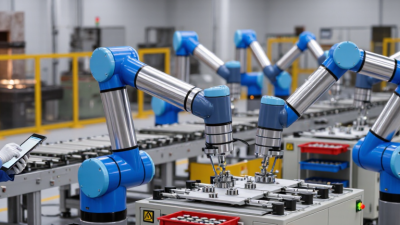
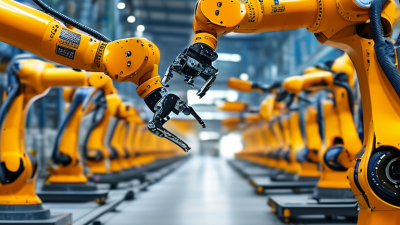
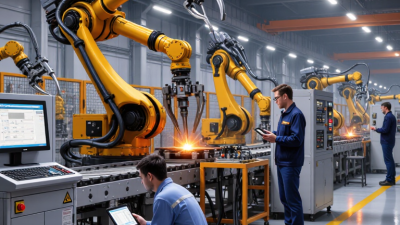
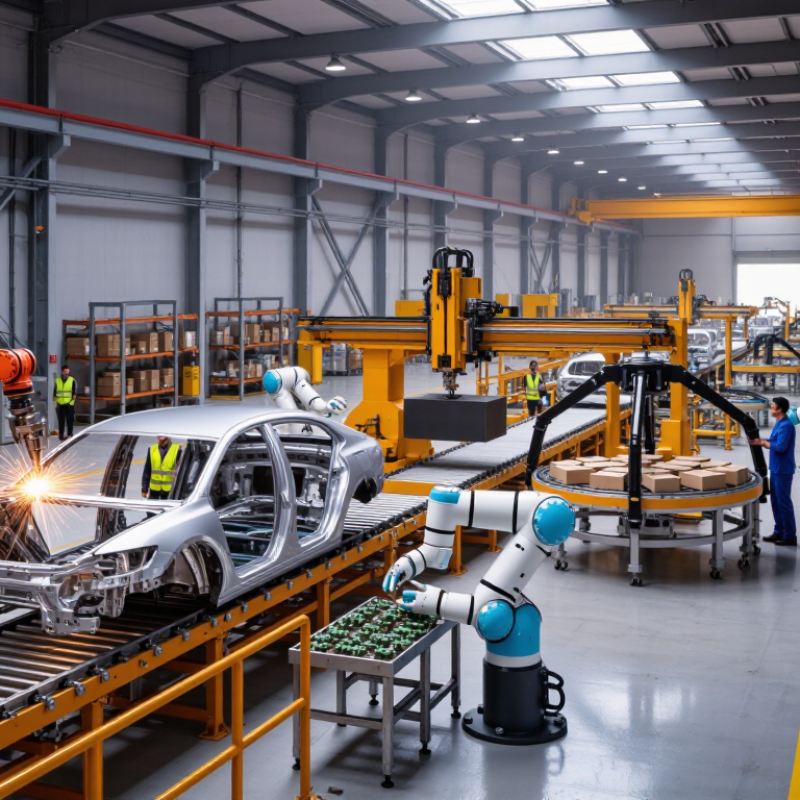
A factory robot is not one machine with one purpose. The term robot machine covers several designs, each suited to particular tasks, spaces, and loads. An articulated arm may weld a vehicle frame, while a SCARA robot places small components on an electronics line. Cartesian robots move along straight axes, and delta robots can sort light products at high speed. Collaborative robots are designed to work near people under defined conditions. Mobile robots carry materials between work areas.

The differences become clearer on the factory floor. Picture a palletizing arm lifting boxes beside a conveyor, or a compact robot repeating precise movements at a workbench. Reach, payload, speed, accuracy, and installation space all shape the choice. So do tooling, programming needs, maintenance access, and the way workers interact with the equipment. A fast robot is not automatically the best one. That distinction matters.

This guide introduces common industrial robot types and explains where each is typically used. It also considers practical trade-offs, such as flexibility versus cycle time, and fixed installations versus mobile systems. Names and categories can overlap across manufacturers, so specifications deserve close attention. There is no universal best robot. The right choice depends on the actual process, and real production conditions can expose problems that a brochure does not. Understanding those limits helps teams compare machines more carefully and ask better questions before selecting equipment.
What Types of Robot Machines Are Used in Industry?

What Defines an Industrial Robot?

What Defines an Industrial Robot?

An industrial robot is an automatically controlled, reprogrammable machine that moves tools or materials through programmed motions. Many definitions describe a robot as a multipurpose manipulator with three or more programmable axes. Its controller coordinates those axes, while sensors can help it respond to position, force, or nearby objects. At the end of an arm, a gripper, welding tool, or camera performs the task. The machine may look simple from outside. Its control system is not.

A fixed machine that repeats one unchangeable movement is usually automation, but not necessarily a robot. Reprogrammability and movement across several axes are useful distinctions. In a factory cell, the robot itself is only one part of the system. Tooling, guarding, fixtures, and carefully tested programs also matter. A robot is not intelligent in the human sense. It follows instructions and reacts only to the inputs it has been designed to use. Definitions can vary by industry, so the boundary is not always tidy.

Tips: Check the robot’s axes, payload, reach, and repeatability against the actual task. Test with the real part and tool; a setup that works in a simulation may behave differently on the floor. Keep the work area clear, and document program changes.

What Types of Robot Machines Are Used in Industry?

Common industrial robot designs differ in how many axes they typically control and how they move.

What defines an industrial robot? ISO 8373 defines one as an automatically controlled, reprogrammable, multipurpose manipulator, programmable in three or more axes, for use in industrial automation. The chart shows common configurations; individual models can vary.

How Are Industrial Robots Classified by Structure and Motion?

Industrial robots are often classified by their mechanical structure and the way their joints move. A Cartesian robot travels along three straight axes, like a precise assembly sliding across rails. Its rectangular work zone suits loading machines and handling parts. A cylindrical robot combines rotary movement at its base with linear motion, reaching around a central column.

An articulated robot uses several rotary joints, much like a human arm. It can reach around fixtures and approach a weld from different angles. SCARA robots typically move quickly across a horizontal plane, with vertical motion for tasks such as placing small components. Parallel robots connect several arms to one moving platform. Their compact, stiff structure can support rapid picking, though their work area is usually limited.

These categories describe different things, so they are not always mutually exclusive. Structure tells engineers how a robot is built; motion describes its reachable paths and axes. A robot’s actual working envelope depends on joint limits, tooling, and nearby equipment. Check the motion carefully. A drawing may show a wide reach, but a cable bundle or safety barrier can reduce usable space. That detail is easy to overlook.

What Types of Robot Machines Are Used in Industry? - How Are Industrial Robots Classified by Structure and Motion?

Robot structure Typical motion and axes Workspace shape Common industrial tasks Typical strengths and considerations
Cartesian (gantry) Usually three linear axes that move along X, Y, and Z; optional rotary axes can orient the tool. Rectangular or box-shaped. Machine tending, palletizing, material handling, and precision positioning. Straightforward linear movement and good coverage of large rectangular areas; requires suitable support structures and floor or overhead space.
Cylindrical A rotary base combined with linear movement, commonly a vertical slide and a radial extension. Generally cylindrical or annular. Machine loading, handling around a central station, and assembly operations. Can reach around its base and offers a compact footprint; its reach and access may be limited by the column and arm geometry.
Spherical (polar) Typically combines rotary base and shoulder movements with a telescoping linear arm. Spherical-sector or partial spherical. Material handling, machine service, and operations requiring reach at varied elevations. Provides a broad range of reach directions; positioning and orientation depend on the particular joint arrangement.
SCARA Usually two rotary joints for horizontal-plane movement, a vertical linear axis, and a wrist rotation axis. Approximately annular in the horizontal plane, with vertical travel. High-speed assembly, pick-and-place, packaging, and small-part insertion. Well suited to fast horizontal-plane work and vertical insertion; its motion is less flexible than a six-axis articulated arm for changing tool orientation.
Articulated A serial chain of rotary joints; commonly four, six, or more axes, depending on the task and design. Irregular, roughly spherical or enveloping, and dependent on arm geometry. Welding, painting, material handling, machine tending, and complex assembly. Highly flexible in reach and tool orientation; programming, collision planning, and safe-cell design can be more complex.
Parallel (including delta) Several linked arms connect a fixed base to a moving platform; delta designs commonly use coordinated links for rapid movement. A limited dome-shaped or roughly cylindrical volume beneath the base. High-speed picking, sorting, light assembly, and packaging. Low moving mass can support rapid motion; workspace and payload are often more restricted than for many serial-arm designs.

Note: Robot axis count, reach, payload, speed, and workspace vary by model and configuration. Structure describes the mechanical arrangement; motion describes how the joints or axes move.

Which Robot Types Handle Common Factory Tasks?

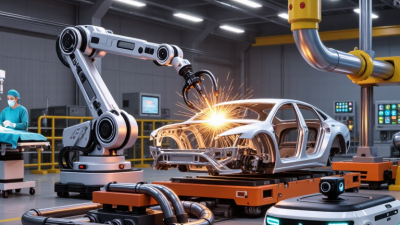
Articulated robots handle welding, machine tending, and palletizing. Their multiple joints let a torch reach around a vehicle frame or place heavy cartons on a pallet. SCARA robots suit fast, precise assembly, such as inserting small components or tightening screws. Cartesian gantries move along straight axes, making them useful for CNC machine tending and dispensing sealant across a flat panel. Delta robots are often chosen for rapid sorting of lightweight items. Collaborative robots can support close-proximity tasks, but shared workspaces still need a proper risk assessment.

The International Federation of Robotics reported 541,302 industrial robot installations worldwide in 2023 in its World Robotics 2024 report. That scale reflects varied factory needs, not one universal machine. In practice, match the robot to payload, reach, cycle time, and the part’s position. A robot that moves quickly may still struggle with a flexible cable or a part that shifts in its fixture. I would check the real production mix before choosing a type; sample parts can behave differently from drawings. Speed matters.

How Do Collaborative and Mobile Robots Extend Industrial Automation?

Collaborative robots extend industrial automation by working near people on tasks such as fastening, inspection, and part handling. A cobot can hold a component steady while an operator fits a cable or checks a seam. Its force limits and sensors can reduce some risks, but they do not make every setup automatically safe. Task speed, tool shape, and nearby traffic still need careful assessment. Human judgment remains valuable, especially when parts vary or a process changes mid-shift.

Mobile robots add movement to automation. They can carry bins between storage areas and work cells, reducing repeated trips across a factory floor. Sensors help them detect obstacles, while route planning supports orderly movement around people and equipment. But a crowded aisle or an uneven floor can slow the system. Integrating robots with existing workflows also takes time; a technically capable machine may still create delays if handoff points are poorly placed. That part is easy to underestimate.

Tips: Start with one repetitive task and measure walking time, waiting, and error rates before choosing a robot. Keep routes clear, mark handoff zones, and test during busy shifts. Review safety procedures whenever tools, loads, or layouts change. Small trials reveal awkward details. A little friction is useful.

What Factors Guide the Choice of an Industrial Robot?

Choosing an industrial robot begins with the task, not the machine category. A palletizing cell handling heavy cartons needs different reach and payload from a compact robot placing small parts. Measure the full load, including grippers, cables, and any product held. Then map the work area: a robot may reach the conveyor but still miss a fixture tucked behind it. Fit matters.

Cycle time is important, but check how it is measured. Fast movement on a specification sheet may not reflect real production with pauses, careful gripping, or frequent product changes. Consider accuracy and repeatability, too. Welding along a seam may demand consistent positioning, while simple material transfer may tolerate more variation. Dust, washdown, heat, and vibration can affect equipment choice and maintenance needs.

Plan for people and integration as carefully as for motion. Check floor space, guarding, access for service, and how the robot will communicate with existing machines. A smaller payload rating can be misleading if a tool or offset load reduces usable capacity. Operators also need practical training, not just a handover document. Budget for installation, spare parts, and downtime, as well as the purchase price. One detail teams sometimes miss is how often the product or layout may change; a system optimized for today’s part can be awkward tomorrow.

Brands

Proudly Trusted by Top Suppliers Worldwide

Let us know and we will automate, together to fit your industrial needs.

Clients

Proudly Trusted by Top Companies Worldwide

Do you need Help? Get in touch.

X

Please fill out the form below and we will get back to you as soon as possible.

    Subscribe our newsletter & get updates