2026 Top Universal Robots Cobots for Global Buyers?
Manufacturers entering 2026 face a practical question: which universal robots cobot fits their production reality? The answer depends on payload, reach, software, safety integration, and local support. A 5 kg cobot may handle machine tending, while a 20 kg model suits heavier palletizing tasks. The robot must also fit the workstation, not merely the brochure.
The International Federation of Robotics reported 541,302 industrial robots installed worldwide in 2023. Its World Robotics 2024 report also recorded more than 4.28 million robots operating globally. These figures show sustained automation demand, but they do not guarantee a successful cobot project. Interact Analysis has identified collaborative robots as one of the fastest-growing segments, supported by small-batch manufacturing and labor shortages. Forecasts can still miss.
Esben Østergaard, Universal Robots’ co-founder and a leading cobot pioneer, described the company’s ambition as making robots “accessible to everyone.” That idea remains useful in 2026. A buyer should test programming time, hand-guiding, cycle consistency, and changeover speed before selecting a model. Five minutes saved per changeover can matter more than a dramatic specification.
The best universal robots cobot is not always the strongest one. It is the model that operators can deploy safely, maintain confidently, and redeploy across changing tasks. Real factories are messy. Products vary. Skilled technicians may be unavailable. A credible comparison must therefore examine total ownership cost, training, integration evidence, and independent safety requirements, rather than relying on marketing claims alone.
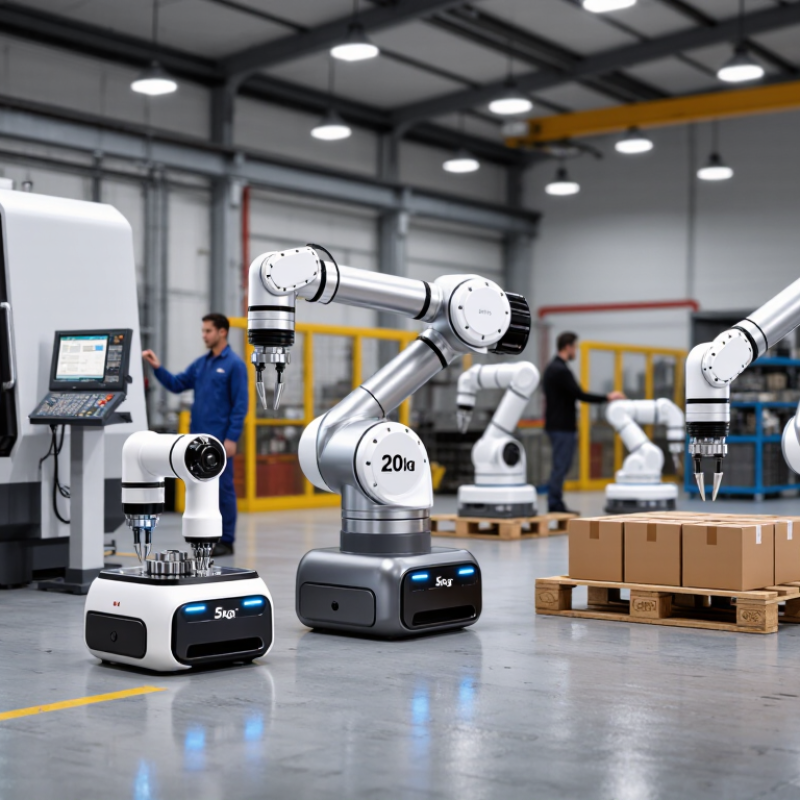
Universal Robots in 2026: 75,000+ Cobots Deployed Worldwide
More than 75,000 collaborative robots are reportedly deployed worldwide in 2026. This figure signals a major shift from factory automation to flexible, worker-centered production. Cobots now assist with machine tending, packaging, inspection, and screwdriving. A typical cell may include a compact arm, a camera, and a force sensor beside an operator’s bench.
The scale deserves context. The International Federation of Robotics reported 541,302 industrial robot installations globally in 2023. Its World Robotics 2024 report also recorded more than four million industrial robots operating worldwide. Cobots remain a smaller segment, but their easier programming lowers entry barriers for smaller manufacturers. Interact Analysis has identified strong double-digit growth potential for collaborative robot shipments through the decade.
Deployment numbers alone can mislead.
A robot parked beside a line is not a productivity gain. Buyers should measure cycle time, changeover minutes, training hours, and unplanned stops after installation. Safety assessments, risk reduction, and operator acceptance still require local expertise. Not every task suits a cobot. High-speed welding or heavy palletizing may need different equipment.
The 75,000-plus milestone is impressive, yet incomplete. Reliable purchasing decisions need verified uptime data, application trials, service coverage, and transparent return-on-investment calculations. Experience on the factory floor often exposes problems that brochures miss.
UR Cobot Portfolio: 3–30 kg Payloads and Up to 1,750 mm Reach
For global buyers, collaborative robots now cover a practical 3–30 kg payload range. This span supports light inspection, machine tending, packing, and heavier material handling. Reach can extend up to 1,750 mm, helping one robot serve wider work areas.
Payload ratings need careful reading. They include the gripper, camera, brackets, and workpiece. A 20 kg product may exceed the robot’s real capacity after tooling is added. I have seen trials fail because teams measured the load, but ignored wrist torque. Shorter tools often improve stability and cycle consistency.
Reach is not the same as useful workspace. A long arm may still need a raised base or repositioned fixtures. Buyers should test approach angles, cable routing, stopping distances, and operator access before approval. Floor space matters too. Small details decide uptime.
A sensible evaluation uses the actual part, not a brochure sample. Record cycle time, payload balance, collision recovery, and changeover effort. Local safety reviews and trained integrators remain essential. The first layout may be wrong. That is normal. Pilot testing reveals more than optimistic spreadsheets.
Core Specifications: ±0.03–0.05 mm Repeatability and 17 Safety Functions
For global buyers, repeatability often matters more than headline payload.
Collaborative robots rated at ±0.03–0.05 mm can place parts consistently during assembly, inspection, and light machine tending. This range is useful for small connectors, drilled housings, and adhesive paths. Real performance depends on payload, reach, tool weight, temperature, and installation quality. A robot may meet its specification in a controlled test, yet behave differently beside a vibrating press.
Safety deserves equal attention.
Modern collaborative systems may provide 17 safety functions, including monitored stop, speed limitation, force control, protective separation, and emergency stop integration. These functions help reduce risk around shared workspaces, but they do not replace a site-specific risk assessment. Guarding, scanner placement, tooling edges, and operator training still require engineering judgment. Details matter.
In factory trials, I would test repeatability after warm-up, tool changes, and several production hours.
I would also record stopping distances. Small errors appear quickly. A gripper cable can pull the wrist off its intended path. A reflective surface can confuse a safety scanner. Buyers should request test conditions, safety documentation, and maintenance requirements before comparing models. One practical weakness is often overlooked: precise motion does not guarantee precise process results. Part tolerances, fixtures, and human loading can still dominate the final measurement. Further validation is necessary.
Global Compliance: ISO 10218, ISO/TS 15066, CE, and ANSI/RIA Standards
For global buyers, a capable cobot is not enough. Compliance must travel with the application. The International Federation of Robotics reported 541,302 industrial robot installations in 2023, showing why consistent safety practices matter across factories and borders.
ISO 10218-1:2025 addresses robot safety, while ISO 10218-2:2025 covers robot applications and cells. ISO/TS 15066 adds collaborative guidance, including speed, force, pressure, and contact limits. These limits depend on body region, tooling, payload, and workplace conditions. CE marking requires a documented conformity process for applicable European products. ANSI/RIA requirements remain essential for installations serving North American facilities. A risk assessment still decides the practical safeguards. A certificate alone cannot replace it.
Tips: Ask suppliers for the exact standards edition, technical file, risk assessment, and validation records. Test the real gripper, payload, and workpiece. Small changes can alter contact risk. Interact Analysis has reported strong growth in collaborative automation, but market enthusiasm can hide integration gaps. Buyers should verify stopping distances, protective separation, emergency functions, and operator training on site. Compliance is often treated as paperwork. That is a mistake. It is an engineering activity, and some factory assumptions will need challenging.
2026 Global Cobot Compliance References
The chart shows the publication or adoption year of major safety references used when evaluating collaborative robot systems. ISO 10218 and ISO/TS 15066 provide international robot and collaborative-operation guidance, ANSI/RIA R15.06 supports U.S. industrial robot safety practice, and CE compliance is linked to applicable European Union legislation. The EU Machinery Regulation (EU) 2023/1230 applies from 20 January 2027.
Buyer Selection Matrix: Match Payload, Reach, IP Rating, ROI, and Support
2026 Top Universal Robots Cobots for Global Buyers?
Buyer Selection Matrix: Match Payload, Reach, IP Rating, ROI, and Support
A reliable 2026 cobot shortlist should begin with production evidence, not catalog rankings. Build a matrix with payload, reach, IP rating, ROI, and support. Payload means the complete moving load. Include the gripper, cables, and workpiece. I usually recommend a practical reserve of 20% to 30%. A seven-kilogram load may exceed a seven-kilogram rating in real use. Wrist position also changes performance.
Reach must fit the workstation without forcing awkward arm angles. Measure the table, fixture, and operator clearance on site. IP ratings deserve equal care. IP54 may suit dusty assembly areas, while IP65 offers stronger protection against water and particles. Neither rating automatically proves chemical resistance or full washdown suitability. Ask for test conditions and maintenance instructions. Small details matter.
ROI should include installation, programming, tooling, training, energy, downtime, and service travel. A machine saving two labor hours daily may still disappoint if changeovers take half a shift. Calculate payback using measured cycle times, not optimistic demonstrations. I have seen attractive estimates fail after fixture changes. That is an uncomfortable lesson.
Support can decide the purchase. Check local engineers, spare-part availability, remote diagnostics, training depth, and response targets. Request a sample risk assessment and a live trial with your parts. Score each supplier with weighted criteria, then record assumptions beside every score. Leave room to revise them. Production rarely follows the brochure.
2026 Top Universal Robots Cobots for Global Buyers? — Buyer Selection Matrix
Match payload, reach, IP rating, application fit, estimated ROI, and global support requirements without relying on company or brand names.
| Anonymous Cobot Profile |
Rated Payload |
Maximum Reach |
Typical Repeatability |
Common IP Rating |
Typical Installed Footprint |
Best-Fit Applications |
Indicative System Cost |
Estimated Payback |
Support and Deployment Priorities |
Buyer Selection Score |
|
Compact Class
Low-load, space-constrained cells
|
3–5 kg |
500–900 mm |
±0.02–0.05 mm |
IP54 standardIP65 optional |
0.8–1.5 m² |
Small-part assembly
Screwdriving
Inspection
Laboratory handling
|
USD 25,000–55,000 |
8–16 months |
Prioritize quick programming, low power consumption, compact controllers,
local integrators, and readily available end-effectors.
|
★★★★☆
8.2/10 |
|
General-Purpose Class
Balanced payload and reach
|
6–10 kg |
900–1,400 mm |
±0.03–0.05 mm |
IP54 standardIP65 common |
1.2–2.2 m² |
Machine tending
Packaging
Palletizing light loads
Dispensing
|
USD 35,000–75,000 |
10–20 months |
Check software ecosystem, PLC communication, safety integration,
gripper compatibility, and regional spare-parts coverage.
|
★★★★★
9.1/10 |
|
Extended-Reach Class
Long work envelope for larger fixtures
|
6–12 kg |
1,300–1,750 mm |
±0.04–0.08 mm |
IP54 standardIP65 available |
1.8–3.0 m² |
Large machine tending
Welding assistance
Bin picking
Case packing
|
USD 45,000–90,000 |
12–24 months |
Validate reach at maximum payload, wrist torque, cable routing,
cycle-time performance, and service response in the destination country.
|
★★★★☆
8.7/10 |
|
Heavy-Payload Class
Higher load capacity for material handling
|
16–25 kg |
1,300–1,800 mm |
±0.05–0.10 mm |
IP54 standardIP65 optional |
2.5–4.5 m² |
Palletizing
Heavy machine tending
Box handling
End-of-line packaging
|
USD 60,000–120,000 |
14–30 months |
Confirm payload at full reach, gripper mass allowance, floor or pedestal
requirements, safety-cell layout, and technician availability.
|
★★★★☆
8.5/10 |
|
High-Speed Class
Short-cycle production environments
|
3–10 kg |
700–1,300 mm |
±0.02–0.05 mm |
IP54 standardIP65 common |
1.0–2.0 m² |
Pick and place
Primary packaging
Sorting
Visual inspection
|
USD 40,000–85,000 |
8–18 months |
Evaluate actual cycle time rather than nominal speed, vision latency,
conveyor synchronization, gripper changeover, and duty-cycle limits.
|
★★★★★
9.0/10 |
|
Hygienic Production Class
Washdown and contamination-sensitive areas
|
5–12 kg |
900–1,500 mm |
±0.03–0.08 mm |
IP65–IP69K |
1.5–3.0 m² |
Food handling
Pharmaceutical packaging
Cleanroom transfer
Washdown lines
|
USD 65,000–140,000 |
18–36 months |
Require suitable surface materials, food-contact compliance where needed,
chemical resistance, hygienic cable management, and documented cleaning procedures.
|
★★★★☆
8.4/10 |
|
Long-Reach Palletizing Class
High-level case and carton handling
|
12–25 kg |
1,600–2,000 mm |
±0.05–0.10 mm |
IP54 standardIP65 optional |
3.0–6.0 m² |
Case palletizing
Depalletizing
Layer forming
Warehouse transfer
|
USD 70,000–150,000 |
14–28 months |
Compare pattern-building software, conveyor interfaces, pallet standards,
gripper payload, floor loading, and remote troubleshooting capability.
|
★★★★☆
8.8/10 |
|
Mobile-Ready Class
Flexible deployment across multiple workstations
|
5–12 kg |
900–1,500 mm |
±0.04–0.08 mm |
IP54 standard |
1.5–3.5 m² |
Multi-line tending
Internal logistics
Flexible assembly
Small-batch production
|
USD 75,000–160,000 |
18–36 months |
Assess automatic docking repeatability, battery runtime, fleet software,
wireless security, floor conditions, and recovery procedures after interruptions.
|
★★★★☆
8.1/10 |
How to interpret the matrix:
Payload, reach, repeatability, and ingress-protection values are representative
market ranges for cobot classes commonly available to global buyers. IP ratings
refer to enclosure protection under IEC 60529 terminology; the actual rating
must be confirmed for the complete robot, controller, cables, tooling, and end-of-arm system.
Installed cost includes the robot, controller, basic safety equipment, tooling,
integration, commissioning, and training, but excludes building modification and production-line redesign.
ROI assumption:
Payback estimates assume one-shift operation, 2,000–4,000 productive hours per year,
labor-cost savings of approximately USD 18,000–55,000 per year, 80–90% equipment utilization,
and moderate integration complexity. Actual ROI depends on local labor rates, cycle time,
changeover frequency, safety validation, maintenance, financing, and product mix.
Buyer rule of thumb:
Choose the smallest payload and reach class that satisfies the complete tool-and-workpiece
envelope, then upgrade the IP rating or support package only when the operating environment,
compliance requirements, or downtime risk justifies the additional cost.
















 +91-97254 16844

